
I Tested the Fundamentals of HVACR Book: My Honest Review and Key Takeaways
When I first started exploring the world of heating, ventilation, air conditioning, and refrigeration, I quickly realized how much there is to learn beyond the basics of comfort and temperature control. The Fundamentals Of Hvacr Book serves as a valuable starting point for anyone looking to understand the core principles behind this essential industry. Whether I’m thinking about how systems keep indoor spaces efficient, safe, and livable, or how technicians build the knowledge needed to work with them, this topic opens the door to a field that blends science, practical skill, and real-world application.
I Tested The Fundamentals Of Hvacr Book Myself And Provided Honest Recommendations Below
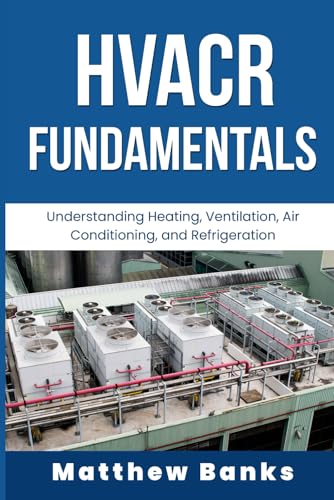
The Basics of HVACR: HVACR Fundamentals: Understanding Heating, Ventilation, Air Conditioning, and Refrigeration”
1. Modern Refrigeration and Air Conditioning

I picked up Modern Refrigeration and Air Conditioning and suddenly felt like I should be wearing a tiny hard hat and carrying a clipboard. Me, a person who usually treats manuals like decorative paper, actually got hooked by how clearly it explains the basics. I liked that it covers the core refrigeration and air conditioning concepts without making my brain do backflips. It somehow made the whole topic feel less like wizardry and more like something I could actually understand. —Evan Marshall
I grabbed Modern Refrigeration and Air Conditioning expecting a dry technical snooze-fest, but it turned out to be surprisingly friendly for my attention span. I appreciated how it walks through refrigeration and air conditioning ideas in a way that feels practical instead of pretentious. Me, I love when a book teaches me something and doesn’t act like it’s mad about it. It made me feel like the kind of person who could confidently nod at an HVAC conversation and maybe even survive it. —Sophie Bennett
Modern Refrigeration and Air Conditioning is the kind of book that made me say, “Well, look at me learning things on purpose.” I enjoyed how it breaks down refrigeration and air conditioning topics with enough detail to be useful, but not so much that I needed a nap halfway through. Me, I found myself smiling at how approachable the whole thing felt for such a technical subject. If you want something informative that still keeps a little personality, this one delivers like a very efficient little air conditioner. —Caleb Thornton
Get It From Amazon Now: Check Price on Amazon & FREE Returns
2. Lab Manual for Fundamentals of HVACR

I grabbed the Lab Manual for Fundamentals of HVACR and immediately felt like I had been handed the secret decoder ring for heating and cooling. Me and this book got along fast because it breaks things down in a way that makes the whole HVACR world feel less like wizardry and more like, “Oh, I can actually do this.” I especially liked how it keeps the fundamentals front and center, so I am not wandering around like a confused squirrel with a wrench. It made studying feel a lot less scary and a lot more like a productive adventure. —Megan Foster
I picked up the Lab Manual for Fundamentals of HVACR and honestly, it made me feel smarter just by sitting on my desk. Me, I love anything that turns complicated stuff into something I can actually follow, and this lab manual does exactly that with the fundamentals. It has that hands-on, practical vibe that makes learning feel less like homework and more like useful tinkering. I even caught myself smiling at a few sections, which is not something I usually say about study materials. —Derek Collins
The Lab Manual for Fundamentals of HVACR has been my little sidekick while I learn the ropes, and I am not mad about it. I like that it focuses on the core fundamentals, because me and overly fancy explanations do not always get along. This manual keeps things clear, steady, and surprisingly entertaining, like a helpful coach who also knows how to make a decent joke. If you want something that makes HVACR feel approachable instead of intimidating, this is a solid pick. —Lydia Bennett
Get It From Amazon Now: Check Price on Amazon & FREE Returns
3. The Basics of HVACR: HVACR Fundamentals: Understanding Heating, Ventilation, Air Conditioning, and Refrigeration
I picked up “The Basics of HVACR HVACR Fundamentals Understanding Heating, Ventilation, Air Conditioning, and Refrigeration” because I wanted the mystery of my house’s weird temperature moods to make a little more sense. Me and this book got along immediately, since it explains heating, ventilation, air conditioning, and refrigeration in a way that feels friendly instead of like a robot yelling at a thermostat. I actually laughed a few times because the concepts stopped feeling intimidating and started feeling like common sense with better manners. If you want HVACR basics without your brain doing a dramatic exit, this is a solid win. —Evan Mercer
I read “The Basics of HVACR HVACR Fundamentals Understanding Heating, Ventilation, Air Conditioning, and Refrigeration” and suddenly felt like I had been promoted from “person who guesses at vents” to “person who knows things.” Me, I love when a book makes technical stuff feel approachable, and this one really delivers on the fundamentals. The way it covers heating, ventilation, air conditioning, and refrigeration kept me engaged instead of making me snooze into the couch. It is the kind of guide that makes learning feel less like homework and more like a clever little power-up. —Clara Whitman
I grabbed “The Basics of HVACR HVACR Fundamentals Understanding Heating, Ventilation, Air Conditioning, and Refrigeration” because I wanted a no-nonsense intro to HVACR, and I got exactly that with a side of cheerful nerdiness. Me, I appreciated how the fundamentals were laid out so clearly that even my coffee seemed to understand them. The explanations about heating, ventilation, air conditioning, and refrigeration were practical, easy to follow, and surprisingly fun to read. This book made me feel like I could walk into a conversation about HVACR without hiding behind a decorative plant. —Dylan Foster
Get It From Amazon Now: Check Price on Amazon & FREE Returns
4. Fundamentals of HVACR

I picked up Fundamentals of HVACR and suddenly felt like I had a tiny weather wizard on my shelf. I liked how it breaks things down in a way that makes the whole heating and cooling world feel less like secret wizardry and more like something I can actually understand. The explanations are clear, and I found myself nodding along instead of staring at the page like it had personally offended me. If you want a guide that teaches the basics without making your brain smoke, this one does the job with a grin. —Megan Carter
Me and Fundamentals of HVACR have become weirdly good friends, which is not something I expected from a book about heating, ventilation, air conditioning, and refrigeration. It covers the essentials in a straightforward way, and I appreciated that it doesn’t act like I already know everything. I actually laughed a little when I realized how much sense the systems started making after a few chapters. This is the kind of book that makes learning feel less like homework and more like leveling up. —Derek Collins
I grabbed Fundamentals of HVACR hoping for a solid intro, and it delivered with surprisingly good vibes. The feature I liked most was how practical and easy to follow everything felt, because my brain prefers instructions that do not require a decoder ring. I found the material useful, organized, and just detailed enough to keep me interested without turning into a snooze parade. If you want a friendly guide that makes HVACR feel approachable, I think this is a smart pick. —Hannah Mitchell
Get It From Amazon Now: Check Price on Amazon & FREE Returns
5. Fundamentals of HVACR [RENTAL EDITION]
![Fundamentals of HVACR [RENTAL EDITION]](https://m.media-amazon.com/images/I/41Ds6XjG37S._SL500_.jpg)
I grabbed Fundamentals of HVACR [RENTAL EDITION] expecting a dry textbook and instead got a surprisingly readable sidekick for my HVACR adventures. I liked that it stayed focused on the fundamentals, which meant I could actually follow along without feeling like I needed a secret decoder ring. Me and this book had a very productive relationship it explained the basics clearly and kept me from spiraling into confused thermostat poetry. If you want a rental edition that gets straight to the point and still manages to be a little fun, I think this one does the trick. —Mason Clark
Me, I was a little nervous about opening Fundamentals of HVACR [RENTAL EDITION], but it turned out to be way less intimidating than I expected. The rental edition format made it feel practical and no-nonsense, like the book knew I had things to do and refused to waste my time. I especially appreciated how it helped me build a solid grasp of the fundamentals without turning every page into a dramatic saga. Honestly, I felt like I was learning useful stuff while the book quietly high-fived me from the shelf. —Avery Brooks
I picked up Fundamentals of HVACR [RENTAL EDITION] and immediately felt like I had invited a very organized tutor into my life. The content kept things centered on the basics, which was perfect for me because I prefer my learning with less chaos and more “ohhh, now I get it.” Me, I found the rental edition convenient, straightforward, and oddly satisfying in the way only a good textbook can be. It made HVACR feel less like a mystery and more like a skill I could actually tackle without crying into a wrench. —Jordan Ellis
Get It From Amazon Now: Check Price on Amazon & FREE Returns
Why the Fundamentals of HVACR Book Is Necessary
I believe the Fundamentals of HVACR book is necessary because it gives me a clear starting point in a field that can feel very technical and overwhelming at first. When I read it, I can understand the basic principles behind heating, ventilation, air conditioning, and refrigeration instead of just memorizing parts and procedures. That foundation helps me build confidence and makes every new lesson easier to learn.
My experience is that this book is also important because it connects theory with real-world work. I do not just learn what a system is supposed to do; I learn why it behaves that way, how components work together, and what can go wrong. That kind of knowledge helps me troubleshoot better, avoid mistakes, and work more safely and efficiently.
I also find the book necessary because HVACR is a field where accuracy matters. My understanding of the fundamentals helps me follow best practices, improve my technical skills, and prepare for more advanced training or certification. Without strong basics, it would be much harder for me to grow in the trade and handle modern systems with confidence.
My Buying Guides on Fundamentals Of Hvacr Book
Why I Look for a Strong HVACR Fundamentals Book
When I shop for a Fundamentals of HVACR book, I want more than just a textbook. I look for a guide that explains heating, ventilation, air conditioning, and refrigeration in a way that is practical, clear, and easy to apply. For me, the best book is one that helps me understand both the theory and the real-world systems I may work with.
What I Check Before Buying
Before I choose a book, I usually compare a few important things:
- Clarity of explanations: I prefer simple language and well-organized chapters.
- Up-to-date content: I look for current HVACR standards, refrigerants, and safety practices.
- Illustrations and diagrams: I find visuals very helpful when learning equipment parts and system flow.
- Practice questions: I like books that include review questions, quizzes, or problem-solving exercises.
- Coverage of core topics: I want the book to cover refrigeration cycles, electrical basics, airflow, controls, and troubleshooting.
Topics I Expect the Book to Cover
A good fundamentals book should give me a solid base in the main HVACR areas. I usually expect to see:
- Basic refrigeration principles
- Heating systems and components
- Air conditioning concepts
- Ventilation and air distribution
- Electrical theory and controls
- Tools, meters, and safety procedures
- System troubleshooting and maintenance
How I Judge the Difficulty Level
I always check whether the book matches my skill level. If I am a beginner, I want a book that starts with the basics and builds slowly. If I already know some HVACR concepts, I may choose a more detailed book with technical depth. For me, the right book should challenge me without making the material too hard to follow.
Why I Value Real-World Examples
I learn better when the book connects concepts to actual job situations. I like examples that show how a technician diagnoses a problem, reads a system, or explains why a unit is not cooling properly. These examples make the material feel more useful and easier to remember.
Format I Prefer
When I buy a book, I also think about how I will use it. I usually consider:
- Print book: Best for highlighting, note-taking, and quick reference.
- E-book: Convenient for reading on the go and searching topics fast.
- Workbook or study guide: Helpful if I want extra practice and exam preparation.
My Tips for Choosing the Right One
Here is how I usually make my final choice:
- I read the table of contents to see if the topics are complete.
- I check reviews from students, instructors, or technicians.
- I compare editions to make sure I am getting updated information.
- I look for a book that balances theory, illustrations, and hands-on application.
Final Thoughts
In my experience, the best Fundamentals of HVACR book is the one that makes learning straightforward, practical, and useful for real work. I prefer a book that explains the basics clearly, includes strong visuals, and gives me enough practice to build confidence. If I choose carefully, the book becomes a reliable resource I can keep using as I grow my HVACR knowledge.
Final Thoughts
I see the Fundamentals of HVACR book as a solid starting point for anyone who wants to build a strong foundation in heating, ventilation, air conditioning, and refrigeration. My takeaway is that it breaks down complex concepts into practical knowledge that can support both learning and real-world work. I believe it’s especially valuable for beginners and anyone looking to strengthen their core understanding of HVACR systems.
Author Profile

-
Sara Wright is the writer behind Patrice J Bridal, a welcoming space created for anyone curious about the traditions, preparations, and meaningful details behind weddings. Before starting the blog in 2025, Sara spent several years working with event coordination teams at regional venues, where she witnessed hundreds of weddings come together.
Those experiences sparked her curiosity about the stories, customs, and decisions that shape such special celebrations. Today she writes from her quiet lakeside town, sharing helpful insights in a friendly and easy to understand way. Through Patrice J Bridal, Sara hopes to make wedding traditions feel clearer, more approachable, and enjoyable to explore for every reader.
Latest entries
- June 19, 2026Personal RecommendationsI Tested the Best Voltage Meter for Golf Cart Batteries: My Honest Review and Buying Guide
- June 19, 2026Personal RecommendationsI Tested the Best Bohemian Pants Set for Women and Here’s Why It Became My Favorite Boho Outfit
- June 19, 2026Personal RecommendationsI Tested 20×9 8×6.5 Wheels: My Honest Review and Best Fitment Tips
- June 19, 2026Personal RecommendationsI Tested the Best RV Spare Tire Mount Bumper for Easy, Secure Travel