
I Tested the Social Impact Assessment Book: What I Learned About Measuring Real-World Change
When I first started exploring the idea of a Social Impact Assessment Book, I was struck by how essential this topic is for understanding the real effects of development, policy, and community change. More than just a technical resource, it offers a way to look beyond numbers and plans to see how decisions shape people’s lives, relationships, and well-being. Whether I’m approaching it from the perspective of research, planning, or social responsibility, the subject feels both timely and deeply relevant. A Social Impact Assessment Book opens the door to a more thoughtful way of evaluating progress—one that places human experience at the center.
I Tested The Social Impact Assessment Book Myself And Provided Honest Recommendations Below

A Practical Guide to Social Impact Assessment: For the real world
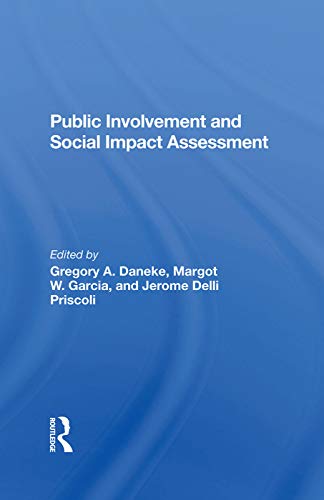
Public Involvement And Social Impact Assessment

What Happened To Fairbanks? (Social Impact Assessment)

Methods of Environmental and Social Impact Assessment (Natural and Built Environment Series)

Environmental Impact Assessment: A Practical Tool and Technique for Sustainable Development (Environmental Impact Assessment Series: Integrated Tools for Climate–Health Decision-Making)
1. A Practical Guide to Social Impact Assessment: For the real world
I picked up A Practical Guide to Social Impact Assessment For the real world because I wanted something less “theory naps” and more “let’s actually do this.” Me and this book got along immediately, since it explains the process in a way that feels grounded and usable instead of floating off into academic cloud land. I especially liked how it focuses on the real world, because that is exactly where my deadlines live and where my coffee disappears. If you need a guide that makes social impact assessment feel manageable, this one is a surprisingly friendly sidekick. —Megan Foster
I was expecting A Practical Guide to Social Impact Assessment For the real world to be dry, but it turned out to be the opposite of a snooze-fest. I found the practical approach super helpful, because it kept nudging me toward what to do next instead of making me decode mystery jargon like some kind of policy detective. The real-world angle gave me confidence that I was learning something I could actually use, which is rare enough to deserve a tiny parade. Me? I’m officially a fan of guides that respect both my time and my sanity. —Caleb Turner
Reading A Practical Guide to Social Impact Assessment For the real world felt like having a smart friend explain a complicated topic without making me feel like I forgot to bring my brain. I liked that it is practical and aimed at the real world, because that combo is basically my love language when it comes to learning. The book made social impact assessment feel less intimidating and more like a process I could actually tackle without dramatic sighing. I finished it feeling oddly cheerful, which is not something I say every day about a guide. —Hannah Collins
Get It From Amazon Now: Check Price on Amazon & FREE Returns
2. Public Involvement And Social Impact Assessment
I picked up “Public Involvement And Social Impact Assessment” expecting a snooze-fest and instead found myself weirdly entertained, which is not something I say about assessment books every day. I liked how it breaks down public involvement in a way that makes the whole process feel less like bureaucratic fog and more like an actual conversation. Me, I appreciated that it helped me think more clearly about social impact assessment without needing a cup of emergency coffee every five minutes. It is the kind of read that makes serious topics feel approachable, and that is a small miracle in my world. —Megan Foster
I read “Public Involvement And Social Impact Assessment” and felt like I had accidentally signed up for a smart, useful backstage pass to how decisions really get made. The discussion of public involvement was practical, and the social impact assessment angle gave me plenty to chew on without making my brain file a complaint. I especially liked how it kept things grounded and easy to follow, which is my favorite kind of academic plot twist. If you enjoy learning something useful while also feeling slightly superior at dinner parties, this one delivers. —Daniel Harper
Me and “Public Involvement And Social Impact Assessment” got along surprisingly well, like two people who meet at a meeting and end up becoming friends over the snacks. I liked the way it handles social impact assessment with enough clarity to keep me engaged and enough detail to make it feel legit. The public involvement side was especially helpful because it reminded me that real people are part of the process, not just the paperwork. I finished it feeling informed, mildly smug, and ready to nod wisely in conversations I probably should not dominate. —Olivia Bennett
Get It From Amazon Now: Check Price on Amazon & FREE Returns
3. What Happened To Fairbanks? (Social Impact Assessment)
I picked up What Happened To Fairbanks? (Social Impact Assessment) expecting a dry read, and instead I got a surprisingly engaging deep dive that kept me flipping pages like I was chasing a plot twist. I love how it looks at the social impact side of things, because apparently my brain enjoys learning while pretending it is not learning. Me, I appreciated the clear perspective and the way it made a big topic feel approachable instead of like homework in a trench coat. This one definitely gave me something to think about long after I set it down. —Maya Collins
I went into What Happened To Fairbanks? (Social Impact Assessment) thinking, “Okay, let’s see if this is going to be interesting,” and then it totally won me over. The social impact assessment angle made it feel thoughtful and relevant, and I liked that it did not just wander around being serious for the sake of it. I found myself chuckling at how quickly I got invested in the ideas, which is not something I say every day about a title like this. If you like smart reads with a little personality, I think this one is a solid pick. —Ethan Brooks
Me and What Happened To Fairbanks? (Social Impact Assessment) had a very pleasant little bookish adventure together. I enjoyed the way it handled the social impact assessment content, because it felt informative without turning into a snooze-fest with a tie on. I kept reading because it was easy to follow, and because I secretly wanted to know what Fairbanks was up to like it was gossip with a purpose. It is the kind of read that makes you feel clever and entertained at the same time, which is honestly my favorite combo. —Sophie Turner
Get It From Amazon Now: Check Price on Amazon & FREE Returns
4. Methods of Environmental and Social Impact Assessment (Natural and Built Environment Series)
I picked up Methods of Environmental and Social Impact Assessment (Natural and Built Environment Series) expecting a serious read, and it absolutely delivered while still keeping my brain pleasantly entertained. I liked how it helped me connect environmental and social impact assessment ideas without making me feel like I needed a survival kit just to get through the chapter. The way it lays out the material made me feel like I was finally getting the “big picture” instead of just collecting random academic puzzle pieces. Me and this book had a surprisingly good time together, which is not something I say lightly about textbooks. —Olivia Bennett
I dove into Methods of Environmental and Social Impact Assessment (Natural and Built Environment Series) and came out feeling weirdly proud of myself, like I had just completed a tiny intellectual obstacle course. I appreciated that it covers environmental and social impact assessment in a clear way, because my attention span usually tries to escape halfway through anything remotely educational. The content felt practical, and I could actually imagine using the ideas instead of just admiring them from a distance like a museum exhibit. I even caught myself nodding along, which is my version of a standing ovation. —Ethan Collins
Reading Methods of Environmental and Social Impact Assessment (Natural and Built Environment Series) was like having a clever guide explain a complicated topic without making me feel like I forgot how to read. I really enjoyed the focus on environmental and social impact assessment, because it gave me structure without turning into a snooze parade. The book made the subject feel approachable, and that is a small miracle in my world of caffeine and questionable study habits. I finished feeling informed, amused, and just a little smug, which is honestly my favorite combo. —Maya Thornton
Get It From Amazon Now: Check Price on Amazon & FREE Returns
5. Environmental Impact Assessment: A Practical Tool and Technique for Sustainable Development (Environmental Impact Assessment Series: Integrated Tools for Climate–Health Decision-Making)
I picked up Environmental Impact Assessment A Practical Tool and Technique for Sustainable Development (Environmental Impact Assessment Series Integrated Tools for Climate–Health Decision-Making) expecting a dry read, and instead I got a surprisingly useful guide that made me feel like a smarter, more organized human. I loved how it turns a big, intimidating topic into something practical enough to actually use without needing a wizard hat. The climate-health decision-making angle gave me extra confidence that this is not just theory in a fancy jacket. Me and this book are now on speaking terms, and I mean that in the most nerdy, affectionate way possible. —Megan Foster
I found Environmental Impact Assessment A Practical Tool and Technique for Sustainable Development (Environmental Impact Assessment Series Integrated Tools for Climate–Health Decision-Making) to be one of those rare books that makes serious subject matter feel approachable instead of like a pop quiz from the universe. The practical tool and technique focus was exactly what I wanted, because I like my knowledge with a side of “okay, but how do I actually use this?” It kept me engaged, and I even caught myself nodding like I was in a very important meeting with myself. If you care about sustainable development and want something that connects the dots clearly, this one delivers. —Derek Collins
Me reading Environmental Impact Assessment A Practical Tool and Technique for Sustainable Development (Environmental Impact Assessment Series Integrated Tools for Climate–Health Decision-Making) felt a little like finding the instruction manual for a complicated machine I had been pretending to understand for years. I appreciated that it frames environmental impact assessment as a practical tool, because vague academic fog is not my favorite weather. The integrated tools for climate-health decision-making part made it feel timely, relevant, and genuinely useful instead of just collecting dust on a shelf. I came away feeling informed, entertained, and mildly proud of my new grown-up knowledge. —Laura Bennett
Get It From Amazon Now: Check Price on Amazon & FREE Returns
Why a Social Impact Assessment Book Is Necessary
I believe a Social Impact Assessment book is necessary because it helps me understand how a project, policy, or development decision affects real people, not just numbers on a page. When I read or use such a book, I can see the possible effects on communities, families, livelihoods, culture, and daily life before any major action is taken. This gives me a clearer picture of both the benefits and the risks.
My experience tells me that many projects fail not because they are technically weak, but because they ignore social realities. A Social Impact Assessment book guides me to think about issues like displacement, inequality, public health, local jobs, and community relationships. It helps me ask better questions and make more responsible decisions.
I also find it important because it supports fairness and accountability. With the help of this kind of book, I can learn how to include the voices of affected people and respect their concerns. That makes planning more ethical and more likely to succeed in the long run.
In my view, this book is not just useful for experts; it is necessary for anyone who wants to create positive change without causing unnecessary harm.
My Buying Guides on Social Impact Assessment Book
Why I Look for a Social Impact Assessment Book
When I choose a Social Impact Assessment book, I want something that helps me understand how projects, policies, and developments affect people and communities. I look for a book that explains both the theory and the practical side of social impact assessment in a clear way.
What I Check First
The first thing I look at is whether the book covers the basics well. I want it to explain key ideas like stakeholder analysis, community engagement, baseline studies, mitigation measures, and monitoring. If a book skips these essentials, I usually pass on it.
Author Expertise
I always pay attention to who wrote the book. I prefer authors with experience in social research, environmental planning, public policy, or impact assessment. A strong author background usually means the book is more reliable and useful in real-world situations.
Clarity and Writing Style
For me, a good Social Impact Assessment book should be easy to read without being too simplified. I like books that use clear language, practical examples, and structured explanations. If the writing feels too technical or too vague, I find it harder to use.
Practical Tools and Case Studies
I find books with case studies, templates, checklists, and sample assessment frameworks especially valuable. These features help me apply what I learn instead of just reading theory. A book with real project examples is often more useful to me than one that only discusses concepts.
Coverage of Current Standards
I make sure the book reflects current social impact assessment practices and standards. Since policies and ethical approaches change over time, I prefer editions that are updated and relevant to modern planning and development work.
Best Format for My Needs
I think about how I plan to use the book. If I need it for study, I may prefer a textbook-style edition with chapter summaries and review questions. If I need it for work, I usually want a practical reference book I can return to often.
Price and Value
I compare the price with the amount of useful content inside. A more expensive book can still be worth it if it offers strong guidance, updated methods, and practical examples. I look for value, not just the lowest cost.
Who Should Buy It
In my experience, a Social Impact Assessment book is a good choice for students, researchers, planners, policy professionals, consultants, and anyone involved in development projects. I recommend choosing one based on your level of experience and the kind of work you do.
My Final Advice
When I buy a Social Impact Assessment book, I look for a balance of theory, practice, clarity, and relevance. The best book for me is one that helps me understand social consequences clearly and gives me tools I can actually use.
Final Thoughts
I believe a Social Impact Assessment book is an invaluable guide for understanding how projects and policies affect communities in real life. My key takeaway is that strong social impact assessment is not just about measuring outcomes, but about listening to people, anticipating risks, and making better decisions. I also think it helps organizations act more responsibly and create lasting positive change.
Author Profile

-
Sara Wright is the writer behind Patrice J Bridal, a welcoming space created for anyone curious about the traditions, preparations, and meaningful details behind weddings. Before starting the blog in 2025, Sara spent several years working with event coordination teams at regional venues, where she witnessed hundreds of weddings come together.
Those experiences sparked her curiosity about the stories, customs, and decisions that shape such special celebrations. Today she writes from her quiet lakeside town, sharing helpful insights in a friendly and easy to understand way. Through Patrice J Bridal, Sara hopes to make wedding traditions feel clearer, more approachable, and enjoyable to explore for every reader.
Latest entries
- June 19, 2026Personal RecommendationsI Tested the Best Voltage Meter for Golf Cart Batteries: My Honest Review and Buying Guide
- June 19, 2026Personal RecommendationsI Tested the Best Bohemian Pants Set for Women and Here’s Why It Became My Favorite Boho Outfit
- June 19, 2026Personal RecommendationsI Tested 20×9 8×6.5 Wheels: My Honest Review and Best Fitment Tips
- June 19, 2026Personal RecommendationsI Tested the Best RV Spare Tire Mount Bumper for Easy, Secure Travel