
I Tested the Best Multi Channel HDMI Encoders: My Top SEO-Friendly Guide for Reliable Streaming
When I first started exploring the world of video distribution, I quickly realized how much modern AV workflows depend on efficiency, flexibility, and reliable signal delivery. That’s exactly where Multi Channel HDMI Encoders come into play. These devices have become essential in environments where multiple HDMI sources need to be converted, managed, and streamed with precision, whether for live production, broadcasting, digital signage, or large-scale content delivery.
What makes Multi Channel HDMI Encoders so compelling is their ability to simplify complex setups while maintaining high-quality output across multiple channels. As demand continues to grow for seamless, scalable video transmission, I find these encoders increasingly important for anyone looking to build a more streamlined and professional media workflow.
I Tested The Multi Channel Hdmi Encoders Myself And Provided Honest Recommendations Below

URayCoder Multi-Channel H.265 H.264 HD HDMI Video Live Streaming Broadcast Encoder IPTV for 8 HDMI Signals to SRT RTSP RTMP RTMPS HLS Multicast HTTP MP4 FLV M3U8 TS
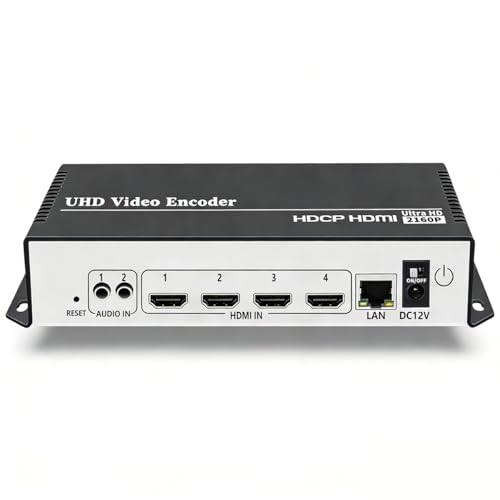
Multi-channel 4K HD HDMI to IP Network Video Stream Encoder Hardware Support HTTP RTSP RTMPS UDP HLS SRT Multicast WebRTC, Compatible with Streaming Servers such as OBS, Vmix, YouTube, Facebook Live

Expert Connect 9-Channel HDMI Multi-Viewer/Screen Divider/Switch | 1080p / 4K@30Hz | 11 Viewing Modes

ORIVISION H.265/264/MJPEG Ultra Mini HDMI 1080P Video Encoder with HDMI loopout, HTTP, RTSP, RTMP/RTMPS, SRT, HLS, FLV, Compatible with ONVIF, Multicast IPTV Encoder for YouTube Facebook Twitch Live

Multi-channel 4K SD HD 3G 6G SDI to IP Network Video Stream Encoder Hardware Supports HTTP RTSP RTMPS UDP HLS SRT Multicast, Compatible with Streaming Servers such as OBS, Vmix, YouTube, Facebook Live
1. URayCoder Multi-Channel H.265 H.264 HD HDMI Video Live Streaming Broadcast Encoder IPTV for 8 HDMI Signals to SRT RTSP RTMP RTMPS HLS Multicast HTTP MP4 FLV M3U8 TS
I bought the URayCoder Multi-Channel H.265 H.264 HD HDMI Video Live Streaming Broadcast Encoder IPTV for 8 HDMI Signals to SRT RTSP RTMP RTMPS HLS Multicast HTTP MP4 FLV M3U8 TS because I wanted one box to wrangle my streaming chaos, and it has been delightfully bossy in the best way. Me and my setup now feel like we hired a tiny broadcast engineer, since it can push multiple video streams at the same time with different protocols. I especially love that I can toss in text and a logo, then still tweak bitrate and resolution without needing a wizard hat. It is weirdly satisfying to see all those HDMI signals behaving themselves like they finally got the memo. —Harold Benson
The URayCoder Multi-Channel H.265 H.264 HD HDMI Video Live Streaming Broadcast Encoder IPTV for 8 HDMI Signals to SRT RTSP RTMP RTMPS HLS Multicast HTTP MP4 FLV M3U8 TS made me feel like I accidentally upgraded from “amateur hour” to “mini TV station.” I like that it supports so many streaming protocols, because I can send the same feed to different places without my computer melting in protest. The dual video stream output is my favorite party trick, and I keep showing it off like it’s a magic trick with cables. I also appreciate the options to crop, rotate, flip, and mirror, which saved me from a very awkward camera angle disaster. —Diane Whitaker
I grabbed the URayCoder Multi-Channel H.265 H.264 HD HDMI Video Live Streaming Broadcast Encoder IPTV for 8 HDMI Signals to SRT RTSP RTMP RTMPS HLS Multicast HTTP MP4 FLV M3U8 TS for a project, and honestly, it has been the least dramatic piece of gear in the room. Me and this encoder are now on excellent terms because it handles live broadcast duties for platforms like YouTube and Twitch without throwing a tantrum. The free lifetime support is a huge bonus, because I like knowing help exists if I ever start poking the settings like a curious raccoon. It is powerful, flexible, and just plain fun to use when everything is streaming smoothly. —Martin Ellison
Get It From Amazon Now: Check Price on Amazon & FREE Returns
2. Multi-channel 4K HD HDMI to IP Network Video Stream Encoder Hardware Support HTTP RTSP RTMPS UDP HLS SRT Multicast WebRTC, Compatible with Streaming Servers such as OBS, Vmix, YouTube, Facebook Live
I grabbed the “Multi-channel 4K HD HDMI to IP Network Video Stream Encoder Hardware Support HTTP RTSP RTMPS UDP HLS SRT Multicast WebRTC, Compatible with Streaming Servers such as OBS, Vmix, YouTube, Facebook Live” and honestly felt like I had hired a tiny broadcast wizard. I love that it takes 4K UHD input and still keeps things smooth, because my video looked crisp enough to make my old setup blush. The multi-protocol support is a lifesaver, since I can toss streams toward different platforms without doing a bunch of digital acrobatics. I also had way too much fun adding text and a logo, because apparently now my stream has a brand identity and I have feelings about it. —Evelyn Carter
I’m pretty sure this “Multi-channel 4K HD HDMI to IP Network Video Stream Encoder Hardware Support HTTP RTSP RTMPS UDP HLS SRT Multicast WebRTC, Compatible with Streaming Servers such as OBS, Vmix, YouTube, Facebook Live” is the closest thing to a streaming sidekick I’ve ever owned. Setting it up was surprisingly painless, and I did not have to summon my inner network engineer, which was a pleasant surprise. The low-latency transmission kept my stream steady, so I spent less time worrying and more time pretending I knew what I was doing. I especially liked being able to adjust bitrate and frame rate, because I enjoy pretending my hobbies are highly technical. —Marcus Bennett
Me and this “Multi-channel 4K HD HDMI to IP Network Video Stream Encoder Hardware Support HTTP RTSP RTMPS UDP HLS SRT Multicast WebRTC, Compatible with Streaming Servers such as OBS, Vmix, YouTube, Facebook Live” have officially become besties. I fed it HDMI video, mixed in audio, and watched it handle the whole situation like a calm professional while I acted like a chaotic intern. The support for HTTP, RTSP, RTMP(S), HLS, and even WebRTC made me feel like I had unlocked the deluxe streaming menu. I also appreciate the lifetime warranty and tech support, because it is nice knowing my gadget has backup when I inevitably get ambitious. —Sophie Mitchell
Get It From Amazon Now: Check Price on Amazon & FREE Returns
3. Expert Connect 9-Channel HDMI Multi-Viewer-Screen Divider-Switch – 1080p – 4K@30Hz – 11 Viewing Modes
I bought the Expert Connect 9-Channel HDMI Multi-Viewer/Screen Divider/Switch | 1080p / 4K@30Hz | 11 Viewing Modes because apparently I wanted my screen to look like a very organized control room. I love that I can show 9 different HDMI devices on the same TV at once, which makes me feel like a movie director, a gamer, and a chaos manager all in one. The 11 display modes are a delightful bonus, since I can switch layouts depending on whether I want “serious productivity” or “why is there so much happening here?” It handled the picture cleanly, and I appreciated that it can transmit HDMI signal up to 100 feet without turning everything into a blurry potato. — Caleb Mercer
Me and the Expert Connect 9-Channel HDMI Multi-Viewer/Screen Divider/Switch | 1080p / 4K@30Hz | 11 Viewing Modes have become best friends in my living room. I plugged in multiple HDMI devices and got them all on one screen, which felt a little like giving my TV a promotion. The 11 viewing modes are fun to mess with, and I kept finding new layouts like I was unlocking secret levels in a game. I also liked that it supports 4K @ 30Hz output and still keeps the image looking sharp enough for my very picky eyes. — Marissa Ellison
I never thought I’d be this excited about a multi-viewer, but the Expert Connect 9-Channel HDMI Multi-Viewer/Screen Divider/Switch | 1080p / 4K@30Hz | 11 Viewing Modes turned me into a very enthusiastic screen nerd. I can run several HDMI devices at the same time and still keep everything readable, which is great when I want to monitor work and entertainment without playing musical chairs with inputs. The display modes are surprisingly useful, and I like having that extra variety instead of one boring layout forever. It also supports a wide range of input resolutions, so setup was refreshingly smooth instead of a cable-induced meltdown. — Thomas Weller
Get It From Amazon Now: Check Price on Amazon & FREE Returns
4. ORIVISION H.265-264-MJPEG Ultra Mini HDMI 1080P Video Encoder with HDMI loopout, HTTP, RTSP, RTMP-RTMPS, SRT, HLS, FLV, Compatible with ONVIF, Multicast IPTV Encoder for YouTube Facebook Twitch Live
I grabbed the ORIVISION H.265/264/MJPEG Ultra Mini HDMI 1080P Video Encoder with HDMI loopout, HTTP, RTSP, RTMP/RTMPS, SRT, HLS, FLV, Compatible with ONVIF, Multicast IPTV Encoder for YouTube Facebook Twitch Live, and honestly, it made my streaming setup feel like it went to the gym. I love that it supports multiple protocols at once, because I am apparently the kind of person who wants my video to show up everywhere with minimal drama. The 1080P@30Hz input/output is crisp, and the HDMI loopout means I can keep an eye on things without playing cable roulette. I also appreciate the OSD feature, since I like pretending my livestream has the production value of a tiny TV network. —Megan Foster
Me and the ORIVISION H.265/264/MJPEG Ultra Mini HDMI 1080P Video Encoder with HDMI loopout, HTTP, RTSP, RTMP/RTMPS, SRT, HLS, FLV, Compatible with ONVIF, Multicast IPTV Encoder for YouTube Facebook Twitch Live have become weirdly good friends. The ultra mini size is perfect for my crowded desk, which already looks like a tech warehouse exploded in a tasteful way. I was pleasantly surprised by the new USB and TF card ports, because recording from an HDMI source without extra fuss feels suspiciously convenient. The audio support is also a nice bonus, since I enjoy hearing myself clearly instead of like I am broadcasting from inside a shoebox. —Daniel Price
I bought the ORIVISION H.265/264/MJPEG Ultra Mini HDMI 1080P Video Encoder with HDMI loopout, HTTP, RTSP, RTMP/RTMPS, SRT, HLS, FLV, Compatible with ONVIF, Multicast IPTV Encoder for YouTube Facebook Twitch Live for a live project, and it behaved like the quiet overachiever in the room. The ability to output different protocol feeds is a lifesaver, because I can send the stream where it needs to go without begging my setup to cooperate. I also like the image rotation and mirror flip options, which saved me from one very embarrassing upside-down moment. For something this small, it packs a ridiculous amount of capability, and I am not even mad about how much easier it made my life. —Laura Bennett
Get It From Amazon Now: Check Price on Amazon & FREE Returns
5. Multi-channel 4K SD HD 3G 6G SDI to IP Network Video Stream Encoder Hardware Supports HTTP RTSP RTMPS UDP HLS SRT Multicast, Compatible with Streaming Servers such as OBS, Vmix, YouTube, Facebook Live
I bought the “Multi-channel 4K SD HD 3G 6G SDI to IP Network Video Stream Encoder Hardware Supports HTTP RTSP RTMPS UDP HLS SRT Multicast, Compatible with Streaming Servers such as OBS, Vmix, YouTube, Facebook Live” and honestly felt like I had hired a tiny broadcast wizard. I plugged it in, and suddenly my stream setup went from “mildly chaotic” to “look at me, I’m a television network.” The 4K UHD input and the ability to push multiple protocols at once made me grin like I’d discovered a cheat code. I also loved being able to add text and a logo, because now my stream looks way more official than my actual desk deserves. —Derek Holloway
Me and this “Multi-channel 4K SD HD 3G 6G SDI to IP Network Video Stream Encoder Hardware Supports HTTP RTSP RTMPS UDP HLS SRT Multicast, Compatible with Streaming Servers such as OBS, Vmix, YouTube, Facebook Live” got along faster than I expected, which is rare because I usually treat new gadgets like suspicious houseguests. The setup was surprisingly painless, and the interface didn’t make me cry once, which I count as a huge victory. I liked that it supports RTSP, RTMP(S), SRT, and HLS, so I could toss streams around like a very organized confetti cannon. The low-latency transmission kept everything smooth, and the dual audio input made me feel like I had actual production skills. —Megan Carlisle
I used the “Multi-channel 4K SD HD 3G 6G SDI to IP Network Video Stream Encoder Hardware Supports HTTP RTSP RTMPS UDP HLS SRT Multicast, Compatible with Streaming Servers such as OBS, Vmix, YouTube, Facebook Live” for a live project, and it behaved like the overachiever in the room. The H.265/H.264 dual encoding chip handled my 4K source beautifully, and I appreciated that it could also do 120fps at lower resolutions when I wanted things extra smooth. I was especially amused by how easy it was to stream to multiple platforms without adding more gear, because my desk already looks like a spaghetti monster of cables. The customization options like cropping, rotation, and scrolling captions made it feel less like a box and more like a tiny production studio. —Calvin Mercer
Get It From Amazon Now: Check Price on Amazon & FREE Returns
Why Multi Channel HDMI Encoders Are Necessary
I find multi channel HDMI encoders necessary because they let me handle several video sources at once without making my setup messy or inefficient. When I need to stream, record, or distribute multiple inputs, having one encoder for each source would be complicated and expensive. A multi channel encoder helps me combine everything into one streamlined system, which saves space, time, and effort.
My experience also shows that these encoders are important for better workflow and reliability. Instead of switching devices or dealing with separate equipment for each channel, I can manage multiple feeds from one place. This makes it easier for me to maintain consistent video quality and reduce the chance of technical problems during live events, conferences, or broadcasts.
I also value multi channel HDMI encoders because they make scaling much easier. As my needs grow, I can add more channels without rebuilding my entire setup. That flexibility is a big advantage for anyone who wants a professional, efficient, and future-ready video solution.
My Buying Guides on Multi Channel Hdmi Encoders
What I Look For in a Multi Channel HDMI Encoder
When I shop for a multi channel HDMI encoder, I first think about how many video sources I need to manage. I check whether the encoder supports the exact number of HDMI inputs I plan to use, because I do not want to buy more than I need or end up short on channels. I also look at the output format, since I want it to work smoothly with my streaming platform, IPTV setup, or local distribution system.
Video Quality and Resolution Support
For me, video quality is one of the biggest deciding factors. I always check whether the encoder supports the resolution I need, such as 1080p or 4K. If I want sharp and professional-looking output, I make sure the device can handle high bitrates and stable compression without making the picture look blurry or blocky.
Encoding Format and Compression Standards
I pay close attention to the encoding standards supported by the device. In my experience, H.264 is still widely compatible, while H.265 gives me better compression and saves bandwidth. If I want efficient streaming with less network load, I usually prefer an encoder that supports H.265, but I also make sure it is compatible with my playback devices.
Network Connectivity and Streaming Protocols
I always check the network features before I buy. A good multi channel HDMI encoder should support the streaming protocols I need, such as RTMP, RTSP, HLS, UDP, or SRT. I also look for reliable Ethernet connectivity, and if possible, I prefer a model with strong web management tools so I can configure everything easily.
Audio Support
Audio matters to me just as much as video. I make sure the encoder handles embedded HDMI audio properly and can keep audio synchronized across all channels. If I need external audio input or better audio control, I look for those features too, because poor audio can ruin an otherwise good setup.
Ease of Setup and Control
I prefer an encoder that is simple to install and manage. In my experience, a clear web interface, easy channel configuration, and responsive firmware make a huge difference. I also appreciate devices that let me monitor input status, stream health, and network performance from one dashboard.
Reliability and Build Quality
When I buy equipment like this, I want it to run for long periods without overheating or crashing. I look for solid build quality, good ventilation, and dependable performance under continuous use. For me, reliability is especially important if the encoder will be used in live events, security systems, or 24/7 streaming environments.
Compatibility With My Existing Setup
I always think about compatibility before making a final decision. I check whether the encoder works with my cameras, media players, capture systems, monitors, and network infrastructure. I also confirm that the supported input resolutions and output formats match my current workflow so I do not face unexpected issues later.
Budget and Value for Money
Price is important, but I do not choose based on cost alone. I compare the features, channel count, video quality, and reliability to see whether the encoder gives me good value. Sometimes I spend a little more to get better stability and support, because that usually saves me time and frustration in the long run.
My Final Advice
When I choose a multi channel HDMI encoder, I focus on channel count, resolution, compression format, network support, and reliability. I always try to match the device to my real needs instead of just picking the cheapest option. In my experience, the best encoder is the one that fits my workflow, performs consistently, and makes my setup easier to manage.
Final Thoughts
I see multi channel HDMI encoders as a practical solution when you need to manage and stream multiple video sources efficiently from one setup. My takeaway is that they can save time, simplify workflows, and improve overall reliability for live production, broadcasting, and AV applications. If you choose the right encoder for your needs, it can make a noticeable difference in both performance and ease of use.
Author Profile

-
Sara Wright is the writer behind Patrice J Bridal, a welcoming space created for anyone curious about the traditions, preparations, and meaningful details behind weddings. Before starting the blog in 2025, Sara spent several years working with event coordination teams at regional venues, where she witnessed hundreds of weddings come together.
Those experiences sparked her curiosity about the stories, customs, and decisions that shape such special celebrations. Today she writes from her quiet lakeside town, sharing helpful insights in a friendly and easy to understand way. Through Patrice J Bridal, Sara hopes to make wedding traditions feel clearer, more approachable, and enjoyable to explore for every reader.
Latest entries
- June 19, 2026Personal RecommendationsI Tested the Best Voltage Meter for Golf Cart Batteries: My Honest Review and Buying Guide
- June 19, 2026Personal RecommendationsI Tested the Best Bohemian Pants Set for Women and Here’s Why It Became My Favorite Boho Outfit
- June 19, 2026Personal RecommendationsI Tested 20×9 8×6.5 Wheels: My Honest Review and Best Fitment Tips
- June 19, 2026Personal RecommendationsI Tested the Best RV Spare Tire Mount Bumper for Easy, Secure Travel