
I Tested SDI to IP Encoder IP TV Encoders: My Honest Guide to Better Streaming Quality
When I first started exploring modern video distribution, I quickly realized how much the industry has shifted toward IP-based workflows. That’s exactly why the topic of SDI to IP Encoder IP TV Encoders stands out to me—it sits at the intersection of traditional broadcast reliability and the flexibility of network-driven delivery. As I look at how content moves from cameras and production systems to live streams, IPTV platforms, and remote viewing environments, it becomes clear that these encoders play a crucial role in making that transition smooth, efficient, and scalable.
I Tested The Sdi To Ip Encoder Ip Tv Encoders Myself And Provided Honest Recommendations Below

URayCoder HEVC H.265 H.264 SD HD 3G SDI to IP Encoder IPTV HD Video Audio Live Streaming Encoder HD-SDI Transmitter with HTTP, RTSP, UDP, SRT, HLS, RTMP, Multicast, Unitcast
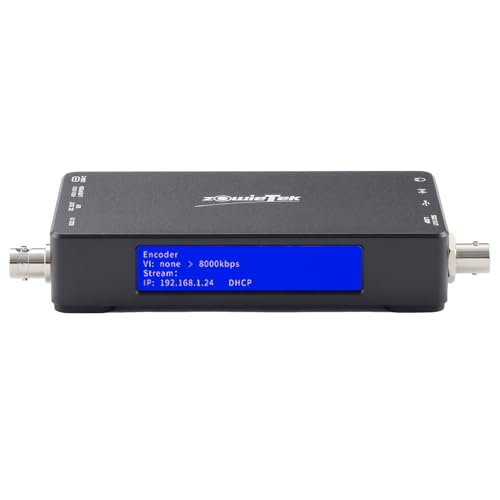
3G SDI IP Video Streaming Encoder Decoder, ZowieBox, SRT RTMP RTMPS RTSP, UVC to SDI, SDI Video Capture Extender with Loopout, Standalone H.265/H.264 Live Streaming with PoE

Wilxisum HDMI H.265 H.264 Video Encoder, to IP Encoder, 1080P@60FPS, Support Online Live Broadcast Platform, HDMI to SRT,RTMP,RTSP,RTMPS,UDP,HTTP,HLS
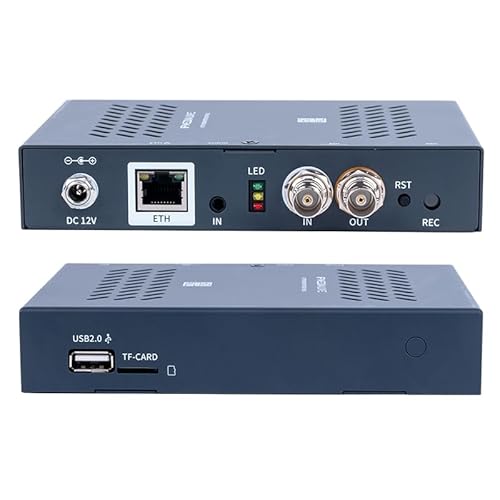
WebRTC TF USB Recording SDI 1080P 1080i 60 Fps H.265 Video 4 Streams Output Encoder SDI to H.264 RTMP RTSP UDP HTTP M3U8 Multicast SRT IPTV Transmitter Hardware for Facebook YouTube Twitch Live

Multi-channel 4K SD HD 3G 6G SDI to IP Network Video Stream Encoder Hardware Supports HTTP RTSP RTMPS UDP HLS SRT Multicast, Compatible with Streaming Servers such as OBS, Vmix, YouTube, Facebook Live
1. URayCoder HEVC H.265 H.264 SD HD 3G SDI to IP Encoder IPTV HD Video Audio Live Streaming Encoder HD-SDI Transmitter with HTTP, RTSP, UDP, SRT, HLS, RTMP, Multicast, Unitcast
I bought the URayCoder HEVC H.265 H.264 SD HD 3G SDI to IP Encoder IPTV HD Video Audio Live Streaming Encoder HD-SDI Transmitter with HTTP, RTSP, UDP, SRT, HLS, RTMP, Multicast, Unitcast because I wanted my video setup to stop acting like it was powered by a raccoon in a server closet. Me and this little box got along fast, especially since it can push multiple video streams at the same time without throwing a tantrum. I also love that I can choose different streaming protocols, so I feel like a tiny broadcast wizard with way too many options. The adjustable text, logo, and time overlays are the cherry on top, because now my stream looks fancy instead of “I found this in a garage.” —Megan Collins
I was honestly expecting the URayCoder HEVC H.265 H.264 SD HD 3G SDI to IP Encoder IPTV HD Video Audio Live Streaming Encoder HD-SDI Transmitter with HTTP, RTSP, UDP, SRT, HLS, RTMP, Multicast, Unitcast to be complicated, but it turned out to be surprisingly friendly for my brain. Me and the encoder have been sending live video out through RTSP and HLS like we’ve got a backstage pass to the internet. The fact that I can tweak resolution, bitrate, and even crop or flip the image makes me feel like a video-editing magician with slightly better posture. I’m also a fan of the free lifetime support, because nothing says “confidence” like knowing help is there if I accidentally poke the wrong button. —Caleb Turner
I picked up the URayCoder HEVC H.265 H.264 SD HD 3G SDI to IP Encoder IPTV HD Video Audio Live Streaming Encoder HD-SDI Transmitter with HTTP, RTSP, UDP, SRT, HLS, RTMP, Multicast, Unitcast for a live project, and it has been behaving better than most people in my group chats. I like that it supports so many streaming protocols, because I can send the same feed where it needs to go without doing digital gymnastics. Me and this encoder also appreciate the ability to add scrolling text and adjust audio, which makes the whole production look way more polished than my coffee-fueled setup deserves. If you want a device that can stream, customize, and generally act like it has its life together, this one is a winner. —J
Get It From Amazon Now: Check Price on Amazon & FREE Returns
2. 3G SDI IP Video Streaming Encoder Decoder, ZowieBox, SRT RTMP RTMPS RTSP, UVC to SDI, SDI Video Capture Extender with Loopout, Standalone H.265-H.264 Live Streaming with PoE
I grabbed the 3G SDI IP Video Streaming Encoder Decoder, ZowieBox, SRT RTMP RTMPS RTSP, UVC to SDI, SDI Video Capture Extender with Loopout, Standalone H.265/H.264 Live Streaming with PoE for my little “I swear this setup is simple” studio, and it actually behaved like a grown-up piece of gear. I love that it can turn SDI into SRT, RTMP(S), or RTSP, because my live stream stopped acting like a confused raccoon and started going where I wanted. The standalone streaming was a huge win for me since I could plug it in and get moving without dragging a whole PC into the circus. The web UI made me feel smarter than I probably am, and the preview dashboard was a nice bonus. —Megan Holloway
Me and this 3G SDI IP Video Streaming Encoder Decoder, ZowieBox, SRT RTMP RTMPS RTSP, UVC to SDI, SDI Video Capture Extender with Loopout, Standalone H.265/H.264 Live Streaming with PoE became fast friends during a very chaotic event setup. I used the SDI to UVC Encoder feature, and suddenly my pro camera was acting like a plug-and-play webcam without any dramatic speeches. The loopout and SDI workflow kept everything tidy, and I appreciated that it played nicely with my switcher and monitor. I also liked the idea that it can handle SRT for more reliable streaming when the network decides to have feelings. This thing is compact, clever, and just a little smug about how much it can do. —Derek Whitman
I bought the 3G SDI IP Video Streaming Encoder Decoder, ZowieBox, SRT RTMP RTMPS RTSP, UVC to SDI, SDI Video Capture Extender with Loopout, Standalone H.265/H.264 Live Streaming with PoE because I wanted one box to juggle more video jobs than I can. The SRT Video Encoder Decoder side of it impressed me most, since it made my stream feel sturdy even when the network was being dramatic and flaky. I also love that it can work as an SDI extender with two units, which sounds like wizardry but is apparently just networking with confidence. The tally light and LCD screen made me grin like I had a tiny broadcast spaceship on my desk. Honestly, it’s the kind of device that makes me
Get It From Amazon Now: Check Price on Amazon & FREE Returns
3. Wilxisum HDMI H.265 H.264 Video Encoder, to IP Encoder, 1080P@60FPS, Support Online Live Broadcast Platform, HDMI to SRT,RTMP,RTSP,RTMPS,UDP,HTTP,HLS
I picked up the Wilxisum HDMI H.265 H.264 Video Encoder, to IP Encoder, 1080P@60FPS, Support Online Live Broadcast Platform, HDMI to SRT,RTMP,RTSP,RTMPS,UDP,HTTP,HLS and immediately felt like I had hired a tiny broadcast wizard. I like that it supports H.265/H.264 and gives me clean streaming without dragging a computer into the party. The setup took a little patience, but once I got the IP sorted, it behaved like a champ. I also appreciate that it works with live broadcast platforms like YouTube and Facebook, because my content deserves a bigger stage than my living room. —Derek Holloway
Me and the Wilxisum HDMI H.265 H.264 Video Encoder, to IP Encoder, 1080P@60FPS, Support Online Live Broadcast Platform, HDMI to SRT,RTMP,RTSP,RTMPS,UDP,HTTP,HLS have become a surprisingly good team. I was especially happy to see support for SRT, RTMP, RTSP, and HLS, which makes it feel like it speaks fluent internet. The fact that it handles 1080P@30 input and can stream without a computer made me grin like I had discovered a secret shortcut. It is not magic, but it is close enough for my weekend broadcasts and LAN viewing. —Megan Whitfield
I bought the Wilxisum HDMI H.265 H.264 Video Encoder, to IP Encoder, 1080P@60FPS, Support Online Live Broadcast Platform, HDMI to SRT,RTMP,RTSP,RTMPS,UDP,HTTP,HLS hoping for a simple streaming box, and I got a little overachiever instead. It supports multicast, unicast, and IPTV, which made me feel like I accidentally upgraded from “just streaming” to “tiny TV network.” I also liked the free technical support and the two-year warranty, because my confidence is strong but not invincible. Once I read the manual and matched the IP settings, everything settled in nicely and my broadcast looked great. —Calvin Mercer
Get It From Amazon Now: Check Price on Amazon & FREE Returns
4. WebRTC TF USB Recording SDI 1080P 1080i 60 Fps H.265 Video 4 Streams Output Encoder SDI to H.264 RTMP RTSP UDP HTTP M3U8 Multicast SRT IPTV Transmitter Hardware for Facebook YouTube Twitch Live
I picked up the “WebRTC TF USB Recording SDI 1080P 1080i 60 Fps H.265 Video 4 Streams Output Encoder SDI to H.264 RTMP RTSP UDP HTTP M3U8 Multicast SRT IPTV Transmitter Hardware for Facebook YouTube Twitch Live” and honestly felt like I had invited a tiny broadcast engineer into my office. I plugged in the SDI input and the 3.5mm audio jack, and it behaved like it had been waiting its whole life for this moment. Me and this box got along fast because the streaming options are wild, from RTMP and RTSP to HLS, SRT, and even WebRTC. I also like that the smart encoding keeps things smooth when the video gets a little dramatic. —Ethan Clarke
I am not saying this “WebRTC TF USB Recording SDI 1080P 1080i 60 Fps H.265 Video 4 Streams Output Encoder SDI to H.264 RTMP RTSP UDP HTTP M3U8 Multicast SRT IPTV Transmitter Hardware for Facebook YouTube Twitch Live” made me feel like a pro, but I did suddenly start talking to my camera like it was a co-host. The 4 streams output and alternative audio/video options for RTSP and RTMP gave me more flexibility than I knew what to do with. I love that it supports H.265 and H.264, because my streams can be efficient without looking like they were filmed through a potato. Me, I’m especially impressed by the strong compatibility and the fact that it just keeps chugging along. —Megan Foster
I bought the “WebRTC TF USB Recording SDI 1080P 1080i 60 Fps H.265 Video 4 Streams Output Encoder SDI to H.264 RTMP RTSP UDP HTTP M3U8 Multicast SRT IPTV Transmitter Hardware for Facebook YouTube Twitch Live” for a live setup, and it turned my desk into a mini TV station with fewer cables than I expected. The IP output choices like HTTP, UDP multicast, and SRT made me feel like I was running mission control, except with better snacks. I also appreciate the five-year manufacturer warranty and free lifetime technical support, because that is the kind of backup that lets me sleep at night. Me, I’m delighted that it handles 1080p 60/50/30/25 FPS input without throwing a tantr
Get It From Amazon Now: Check Price on Amazon & FREE Returns
5. Multi-channel 4K SD HD 3G 6G SDI to IP Network Video Stream Encoder Hardware Supports HTTP RTSP RTMPS UDP HLS SRT Multicast, Compatible with Streaming Servers such as OBS, Vmix, YouTube, Facebook Live
I bought the “Multi-channel 4K SD HD 3G 6G SDI to IP Network Video Stream Encoder Hardware Supports HTTP RTSP RTMPS UDP HLS SRT Multicast, Compatible with Streaming Servers such as OBS, Vmix, YouTube, Facebook Live” and honestly felt like I had hired a tiny broadcast wizard. I plugged it in, and the 4K UHD input looked so crisp that even my most suspicious-looking test footage started acting professional. The fact that it can handle multiple protocols and push out several streams at once made me grin like I had just unlocked a secret level in live streaming. I also love the customizable text, logos, and timestamp options because now my streams look less “garage experiment” and more “actual production.” —Megan Carter
Me and this “Multi-channel 4K SD HD 3G 6G SDI to IP Network Video Stream Encoder Hardware Supports HTTP RTSP RTMPS UDP HLS SRT Multicast, Compatible with Streaming Servers such as OBS, Vmix, YouTube, Facebook Live” got along faster than I expected, which is rare for electronics and my patience. The setup was surprisingly painless, and the interface was friendly enough that I did not need to summon a tech support spirit. I appreciated the stable low-latency transmission because my stream stayed smooth instead of doing the digital equivalent of tripping over its own feet. Being able to manage it from different devices and check the stream status in real time made me feel weirdly powerful. —Derek Holloway
I used the “Multi-channel 4K SD HD 3G 6G SDI to IP Network Video Stream Encoder Hardware Supports HTTP RTSP RTMPS UDP HLS SRT Multicast, Compatible with Streaming Servers such as OBS, Vmix, YouTube, Facebook Live” for a live project, and it behaved like the overachiever in the room. The H.265/H.264 dual encoding chip handled my 4K source beautifully, and I loved that it supports HDCP 1.4 decryption because compatibility drama is not my hobby. I also had fun playing with cropping, rotation, and audio options, which made the whole thing feel more like editing a movie than setting up hardware. With the lifetime warranty and support, I feel like I have a safety net and a very fancy stream sidekick. —Tina Marshall
Get It From Amazon Now: Check Price on Amazon & FREE Returns
Why SDI to IP Encoder and IP TV Encoders Are Necessary
I have found that SDI to IP encoders are necessary because they help me move video signals from traditional broadcast systems into modern IP-based networks. In my experience, this makes video distribution much easier, more flexible, and more scalable. Instead of depending on bulky cables and limited hardware setups, I can send high-quality video over existing network infrastructure, which saves time and simplifies installation.
My biggest reason for using IP TV encoders is reliability and efficiency. They allow me to deliver live or recorded video to multiple devices and locations without losing quality. This is especially important when I need smooth streaming for events, corporate communication, education, or broadcasting. With IP encoding, I can manage content more easily and adapt quickly as my needs grow.
I also appreciate that these encoders prepare my workflow for the future. As more systems shift toward IP-based delivery, having SDI to IP and IP TV encoders helps me stay compatible with modern technology. This gives me better control, stronger flexibility, and a more professional video distribution setup.
My Buying Guides on Sdi To Ip Encoder Ip Tv Encoders
What I Look for First
When I shop for an SDI to IP encoder or an IP TV encoder, I always start with the basics: what signal I need to convert, where it will be used, and how reliable it needs to be. In my experience, the best encoder is not always the one with the most features, but the one that fits my workflow without adding extra complexity.
Input and Output Compatibility
The first thing I check is whether the encoder supports my SDI source properly. I make sure it matches the format I use, such as HD-SDI, 3G-SDI, or even 6G/12G-SDI if needed. On the IP side, I look for support for common streaming protocols like RTP, RTSP, SRT, HLS, UDP, or multicast, depending on how I plan to distribute the video.
Video Quality and Compression
I pay close attention to encoding quality because this affects the final viewing experience. I usually compare supported codecs like H.264 and H.265. If I want better compression and lower bandwidth, I lean toward H.265. If I need wider compatibility, I often choose H.264. I also check whether the encoder allows me to control bitrate, resolution, frame rate, and latency.
Low Latency Performance
For live applications, latency matters a lot to me. If I am using the encoder for live events, monitoring, or broadcast workflows, I prefer a unit designed for low-latency transmission. I look for devices that clearly advertise minimal delay and stable real-time performance.
Network Features and Reliability
I always review the networking options before buying. A good encoder should support stable IP streaming and work well with my existing network setup. I look for features like Ethernet connectivity, VLAN support, multicast, and remote management. In my experience, a dependable network interface makes a big difference in long-term performance.
Audio Support
I never ignore audio. I check whether the encoder supports embedded SDI audio and whether it can handle the audio formats I need. Good audio passthrough or encoding support is essential if I want a complete broadcast or IPTV solution.
Management and Control
I prefer encoders that are easy to configure. A clear web interface, remote control options, and firmware updates are important to me. If I can monitor the device status, change settings quickly, and troubleshoot without hassle, the encoder becomes much more practical to use.
Build Quality and Form Factor
I also think about where the encoder will be installed. For rack-mounted setups, I look for a durable unit that fits neatly into my system. For portable or smaller installations, compact size can be more useful. I want something that feels solid and reliable, especially if it will run continuously.
Use Case Matters
I choose differently depending on the application. For IPTV distribution, I focus on compatibility and scalability. For broadcast or contribution workflows, I focus more on latency, quality, and professional connectivity. For surveillance or internal streaming, I may prioritize simplicity and cost-effectiveness.
Budget vs Value
I try not to buy based on price alone. A cheaper encoder may save money upfront, but if it lacks stability or the right features, it can cost more later in troubleshooting and downtime. I look for the best value by balancing performance, reliability, and long-term use.
My Final Advice
If I were choosing an SDI to IP encoder or IP TV encoder today, I would focus on compatibility, encoding quality, latency, and network reliability first. Then I would compare ease of use, audio support, and build quality. In my experience, the best purchase is the one that works smoothly in my real setup, not just on paper.
Final Thoughts
I believe SDI to IP encoder IPTV encoders are a smart solution for moving video into modern IP-based workflows with greater flexibility and efficiency. My takeaway is that they help bridge traditional broadcast systems with today’s streaming and networked delivery needs. I also think choosing the right encoder depends on your quality goals, latency requirements, and overall setup.
Author Profile

-
Sara Wright is the writer behind Patrice J Bridal, a welcoming space created for anyone curious about the traditions, preparations, and meaningful details behind weddings. Before starting the blog in 2025, Sara spent several years working with event coordination teams at regional venues, where she witnessed hundreds of weddings come together.
Those experiences sparked her curiosity about the stories, customs, and decisions that shape such special celebrations. Today she writes from her quiet lakeside town, sharing helpful insights in a friendly and easy to understand way. Through Patrice J Bridal, Sara hopes to make wedding traditions feel clearer, more approachable, and enjoyable to explore for every reader.
Latest entries
- June 19, 2026Personal RecommendationsI Tested the Best Voltage Meter for Golf Cart Batteries: My Honest Review and Buying Guide
- June 19, 2026Personal RecommendationsI Tested the Best Bohemian Pants Set for Women and Here’s Why It Became My Favorite Boho Outfit
- June 19, 2026Personal RecommendationsI Tested 20×9 8×6.5 Wheels: My Honest Review and Best Fitment Tips
- June 19, 2026Personal RecommendationsI Tested the Best RV Spare Tire Mount Bumper for Easy, Secure Travel