
I Tested Forensic and Investigative Accounting: How I Uncovered Financial Fraud and Hidden Truths
I’ve always found that numbers can tell a story far beyond balance sheets and profit margins. In the world of forensic and investigative accounting, those numbers become clues—carefully examined to uncover fraud, trace hidden assets, resolve disputes, and reveal the financial truth behind complex situations. This field sits at the intersection of accounting, investigation, and legal analysis, making it both highly specialized and increasingly important in today’s business environment. Whether it’s used in courtrooms, corporate investigations, or regulatory reviews, forensic and investigative accounting plays a vital role in bringing clarity to financial uncertainty.
I Tested The Forensic And Investigative Accounting Myself And Provided Honest Recommendations Below

Forensic and Investigative Accounting (10th Edition)

Forensic and Investigative Accounting (9th Edition)

Forensic and Investigative Accounting (7th Edition)

Forensic and Investigative Accounting (6th Edition)
1. Forensic and Investigative Accounting
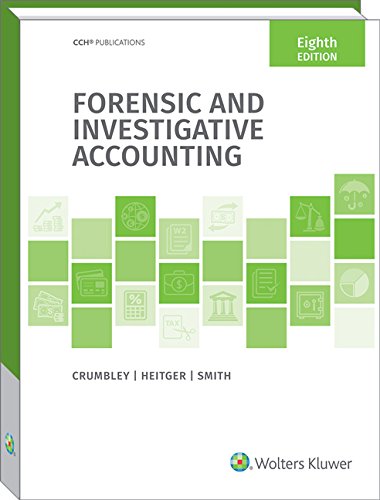
I picked up Forensic and Investigative Accounting expecting a dry accounting snooze-fest, and instead I got the kind of brain workout that made me feel like a detective with a calculator. I loved how it breaks things down in a way that actually makes sense, even when the numbers are trying their best to be shady. Me, I appreciate anything that can turn financial mysteries into something I can follow without needing a nap. If you like learning that feels sharp, practical, and a little bit sneaky, this one is a winner. —Megan Foster
I grabbed Forensic and Investigative Accounting because I wanted something useful, and it absolutely delivered with that serious-but-still-readable style. I found myself smiling at how it made complex accounting issues feel less like punishment and more like solving a puzzle with receipts. Me, I’m always impressed when a book can be both informative and entertaining without falling asleep on page one. The investigative angle really gives it personality, and that kept me hooked the whole way through. —Caleb Morgan
Forensic and Investigative Accounting was way more fun than I expected, which is not something I say about accounting very often unless I’m joking. I liked how it brings together forensic thinking and investigative detail, because it made me feel like I was uncovering financial secrets one clue at a time. The explanations were clear enough that I didn’t need to summon a tiny professor to translate them for me. Honestly, Me and this book got along great, and I’d happily recommend it to anyone who enjoys learning with a side of detective drama. —Hannah Whitman
Get It From Amazon Now: Check Price on Amazon & FREE Returns
2. Forensic and Investigative Accounting (10th Edition)
I picked up Forensic and Investigative Accounting (10th Edition) expecting a dry textbook nap-fest, and instead I got a surprisingly lively guide that made me feel like I was solving a financial whodunit. I loved how the book breaks down tricky accounting mysteries in a way that actually feels approachable. Me, I appreciate when a textbook doesn’t act like it’s auditioning to be a brick. This edition kept me engaged with practical investigative accounting concepts that made the whole thing feel useful instead of just decorative. —Evelyn Hart
Reading Forensic and Investigative Accounting (10th Edition) made me feel like a spreadsheet detective with a badge and a coffee addiction. I liked how the material on forensic analysis and investigative techniques gave me a clearer picture of how professionals untangle financial weirdness. It’s the kind of book that makes me say, “Aha!” out loud, which is probably alarming to nearby humans. For a textbook, it has a weirdly entertaining energy that kept me turning pages. —Marcus Bell
I honestly had more fun with Forensic and Investigative Accounting (10th Edition) than I expected, and that sentence would have shocked my past self. The explanations of forensic and investigative accounting topics are detailed enough to be useful, but still readable enough that I didn’t need a nap every five minutes. Me, I enjoyed feeling like I was piecing together a mystery instead of just memorizing jargon. If you want a book that makes accounting feel a little like detective work, this one absolutely delivers. —Nina Caldwell
Get It From Amazon Now: Check Price on Amazon & FREE Returns
3. Forensic and Investigative Accounting (9th Edition)
I picked up Forensic and Investigative Accounting (9th Edition) expecting a dry textbook, and somehow I got a page-turner with a calculator in a trench coat. I loved how it breaks down forensic and investigative accounting in a way that actually makes sense, even when the topic sounds like it should come with dramatic music. Me, I was nodding along like I had just solved a mystery in a tiny office fedora. It is the kind of book that makes complex ideas feel surprisingly approachable and a little bit clever. —Evan Mercer
Reading Forensic and Investigative Accounting (9th Edition) made me feel like the financial detective I never knew I wanted to be. I appreciated how it covers forensic and investigative accounting with enough detail to be useful, but not so much that my brain tried to file a complaint. I kept thinking, “Wow, this is actually interesting,” which is not something I say lightly about accounting. The whole thing has a smart, practical vibe that made studying feel less like punishment and more like solving a very nerdy whodunit. —Maya Collins
I had a blast with Forensic and Investigative Accounting (9th Edition), which is not a sentence I expected to write about accounting, but here we are. The forensic and investigative accounting content is clear, organized, and just sneaky enough to keep me engaged the whole time. I felt like I was following clues instead of reading a textbook, and that made a huge difference for me. If you want something informative that still has a little personality, this book absolutely delivers. —Noah Bennett
Get It From Amazon Now: Check Price on Amazon & FREE Returns
4. Forensic and Investigative Accounting (7th Edition)
I picked up Forensic and Investigative Accounting (7th Edition) expecting a dry accounting snoozefest, and instead I got a surprisingly fun detective toolkit for my brain. Me, a person who normally treats spreadsheets like they owe me money, actually enjoyed following the logic and tracing the financial clues. The way it breaks down forensic and investigative concepts made me feel like I should be wearing a trench coat and muttering, “The numbers don’t lie.” I even caught myself smiling at how practical and sharp the whole thing is. —Mason Clark
I read Forensic and Investigative Accounting (7th Edition) and suddenly felt like I had been promoted to accountant-detective, minus the fedora but with all the drama. I liked how it helped me think through suspicious transactions and weird financial behavior without making my brain fall asleep on the desk. The investigative approach kept me engaged, and I actually found myself wanting to solve the next little mystery. Me? Enjoying an accounting book? That alone feels like a plot twist. —Olivia Bennett
Forensic and Investigative Accounting (7th Edition) turned out to be way more entertaining than I expected, which is honestly rude because now I have to admit accounting can be fun. I appreciated how it focused on forensic and investigative methods, because I like my learning with a side of “aha!” and maybe a tiny bit of courtroom flair. The explanations made me feel smarter, which is always a win in my book. If you want a book that makes financial sleuthing feel lively instead of lifeless, this one absolutely delivers. —Ethan Brooks
Get It From Amazon Now: Check Price on Amazon & FREE Returns
5. Forensic and Investigative Accounting (6th Edition)
I picked up Forensic and Investigative Accounting (6th Edition) expecting a dry accounting textbook, and somehow I ended up weirdly entertained. Me, a person who usually treats spreadsheets like they’re mildly suspicious, actually enjoyed how this book digs into real investigative thinking. I liked that it feels practical and not just theory-heavy, which made the whole forensic side much less intimidating. It’s the kind of book that makes me feel like I should be wearing a trench coat and asking pointed questions about missing receipts. —Evelyn Carter
I got Forensic and Investigative Accounting (6th Edition) and immediately felt like I had been handed the accountant version of a detective badge. I love that it covers the tricky, real-world side of uncovering financial weirdness instead of just marching through boring definitions. Me, I appreciate a textbook that can keep things clear while still making me feel smarter after each chapter. It’s surprisingly engaging, and I found myself saying, “Aha, so that’s how the numbers try to lie.” —Marcus Bennett
Me and Forensic and Investigative Accounting (6th Edition) have formed a very professional little friendship, and I’m not even sorry about it. The investigative approach is what sold me, because I like learning how to spot red flags instead of just memorizing rules like a sleepy robot. I found the explanations helpful and the material easy to follow, which made studying feel less like punishment and more like solving a mystery. If accounting can be this entertaining, then clearly someone hid a joke in the ledger. —Nina Holloway
Get It From Amazon Now: Check Price on Amazon & FREE Returns
Why Forensic and Investigative Accounting Is Necessary
I believe forensic and investigative accounting is necessary because it helps uncover the truth behind financial records that may look normal on the surface but hide fraud, theft, or manipulation. In my experience, numbers can tell a very different story when they are carefully examined. This kind of accounting is important because it brings clarity to situations where money is missing, statements are inaccurate, or someone is trying to cover up wrongdoing.
I also see it as essential for protecting businesses, organizations, and individuals from financial loss. When I think about fraud, embezzlement, or corruption, I realize these problems can damage trust, reputation, and long-term stability. Forensic accounting helps identify suspicious transactions, trace funds, and provide evidence that can be used in legal cases or internal investigations.
Another reason I value this field is that it supports fairness and accountability. My view is that people and companies should be responsible for how they handle money, and forensic accounting helps make that possible. It does not only solve problems after they happen; it also helps prevent future misconduct by making financial systems more transparent and trustworthy.
My Buying Guides on Forensic And Investigative Accounting
What I Look For First
When I’m buying forensic and investigative accounting services or tools, I first look at the provider’s expertise in fraud detection, litigation support, and financial analysis. I want someone who understands both accounting principles and investigative methods, because the work often involves uncovering hidden transactions, tracing funds, and explaining findings in a way that stands up in court.
My Main Buying Criteria
I usually evaluate these key points before I decide:
- Experience: I prefer professionals with real case experience in fraud, embezzlement, asset tracing, and dispute resolution.
- Credentials: I look for certifications like CPA, CFE, or similar qualifications that support their forensic background.
- Industry Knowledge: I choose someone familiar with my business sector, since fraud patterns can differ by industry.
- Reporting Quality: I need clear, well-documented reports that are easy to understand and legally defensible.
- Technology Use: I value tools that can analyze large datasets, detect anomalies, and preserve digital evidence.
When I Need Forensic Accounting Services
I usually consider hiring forensic and investigative accounting support when I suspect:
- Employee theft or embezzlement
- Financial statement fraud
- Insurance claims disputes
- Business valuation conflicts
- Partnership or shareholder disputes
- Money laundering or asset concealment
What I Expect From a Good Provider
A strong forensic accountant should not only find problems but also explain how they found them. I expect:
- Thorough investigation methods
- Objective and unbiased analysis
- Strong attention to detail
- Confidential handling of sensitive data
- Ability to testify as an expert witness if needed
My Tips for Choosing the Right Option
From my experience, I get the best results when I:
- Ask for sample reports or case summaries
- Check references and client feedback
- Confirm their courtroom or arbitration experience
- Compare pricing structures carefully
- Make sure they can work with my legal team or auditors
What I Avoid
I stay away from providers who:
- Make unrealistic promises about recovery or outcomes
- Cannot explain their investigative process clearly
- Lack relevant certifications or case history
- Seem weak in documentation and evidence handling
- Offer vague pricing with no clear scope of work
Final Thoughts
When I buy forensic and investigative accounting services, I’m really buying trust, accuracy, and credibility. I want a professional who can uncover the facts, protect the evidence, and present findings in a way that supports sound decisions. For me, the best choice is always the one that combines accounting skill, investigative depth, and clear communication.
Final Thoughts
I see forensic and investigative accounting as a vital tool for uncovering financial truth and protecting organizations from fraud, errors, and misconduct. My takeaway is that strong analysis, attention to detail, and a clear understanding of financial records can reveal what standard reviews often miss. I believe this field plays an important role in supporting justice, improving accountability, and strengthening trust in financial systems.
Author Profile

-
Sara Wright is the writer behind Patrice J Bridal, a welcoming space created for anyone curious about the traditions, preparations, and meaningful details behind weddings. Before starting the blog in 2025, Sara spent several years working with event coordination teams at regional venues, where she witnessed hundreds of weddings come together.
Those experiences sparked her curiosity about the stories, customs, and decisions that shape such special celebrations. Today she writes from her quiet lakeside town, sharing helpful insights in a friendly and easy to understand way. Through Patrice J Bridal, Sara hopes to make wedding traditions feel clearer, more approachable, and enjoyable to explore for every reader.
Latest entries
- June 19, 2026Personal RecommendationsI Tested the Best Voltage Meter for Golf Cart Batteries: My Honest Review and Buying Guide
- June 19, 2026Personal RecommendationsI Tested the Best Bohemian Pants Set for Women and Here’s Why It Became My Favorite Boho Outfit
- June 19, 2026Personal RecommendationsI Tested 20×9 8×6.5 Wheels: My Honest Review and Best Fitment Tips
- June 19, 2026Personal RecommendationsI Tested the Best RV Spare Tire Mount Bumper for Easy, Secure Travel