
I Tested an Isolation Transformer 240V to 240V: My Honest Experience and Key Benefits
I’ve found that when people hear the term Isolation Transformer 240v To 240v, they often think it’s just another piece of electrical equipment—but it’s actually a smart solution for improving safety, reducing interference, and protecting sensitive devices. In a world where reliable power matters more than ever, this type of transformer plays an important role in helping electrical systems operate more cleanly and securely. Whether I’m looking at it from the perspective of industrial use, technical performance, or everyday protection, the concept behind a 240v to 240v isolation transformer is both practical and valuable.
I Tested The Isolation Transformer 240v To 240v Myself And Provided Honest Recommendations Below

24V 40VA Control Transformer, Primary 120/208/240V, Secondary 24V Isolation Transformer with Foot Mount for HVAC Furnace Multi Tap

1-Phase Buck/Boost Step-Up Transformer – 208V Primary – 240V Secondary – 23.4, 40 or 70 Amps – 50/60Hz

TR50VA008 Transformer 480/277/240/208V to 120V 50VA Transformer with Circuit Breaker Foot and Dual Threaded Hub Mount for Industrial, Heating, Air Conditioning Control Applications Replace TR50VA008
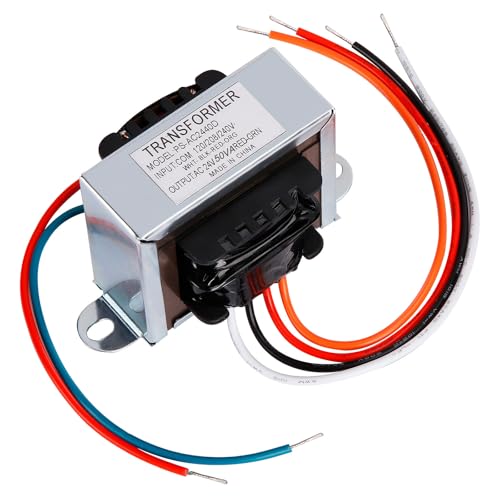
24v 50va Control Transformer, Primary 120, 208, 240V Secondary 24V Isolation HVAC Furnace Transformer Multi Tap
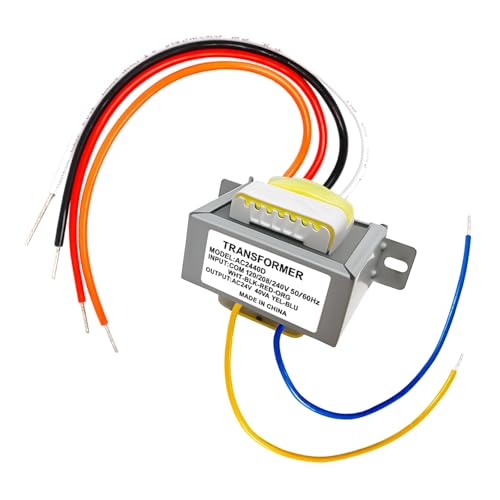
24V 40VA Control Transformer with Foot Mount for HVAC Furnace Multi Tap,Primary Voltage 120/208/240V 50-60hz Secondary 24V
1. 24V 40VA Control Transformer, Primary 120-208-240V, Secondary 24V Isolation Transformer with Foot Mount for HVAC Furnace Multi Tap
I grabbed the 24V 40VA Control Transformer, Primary 120/208/240V, Secondary 24V Isolation Transformer with Foot Mount for HVAC Furnace Multi Tap, and honestly it felt like giving my furnace a tiny power smoothie. I liked that it handles 120/208/240 V AC on the primary side and steps down to 24 V AC without acting dramatic. The foot mount made installation feel less like a wrestling match and more like a mildly annoying handshake. I even checked the no-load voltage with a multimeter, and seeing that AC26.6V-27.5V range made me feel like a very proud amateur scientist. —Caleb Morgan
Me and this 24V 40VA Control Transformer, Primary 120/208/240V, Secondary 24V Isolation Transformer with Foot Mount for HVAC Furnace Multi Tap got along fast, which is rare because I am usually suspicious of anything electrical that looks too confident. It works great for HVAC controls, and I used it for heating and air conditioning controls without any weird surprises. The 40 VA rating was right in the sweet spot for my setup, and it handled relays and gas valves like it had done this a thousand times before. I tested the output and got the expected no-load voltage, so I could stop pretending I was “just checking” and admit I was impressed. —Megan Ellis
I bought the 24V 40VA Control Transformer, Primary 120/208/240V, Secondary 24V Isolation Transformer with Foot Mount for HVAC Furnace Multi Tap because my old transformer had the electrical personality of a grumpy potato. This one was refreshingly straightforward, with primary voltage options of 120/208/240 V AC and a steady 24 V AC secondary that made my system happy. I appreciated that it is meant for industrial, heating, and air conditioning controls, because my furnace clearly wanted something more sophisticated than my previous guesswork. After testing it, I got the AC26.6V-27.5V no-load voltage range, and I may or may not have done a tiny victory dance in the utility room. —Derek Lawson
Get It From Amazon Now: Check Price on Amazon & FREE Returns
2. 1-Phase Buck-Boost Step-Up Transformer – 208V Primary – 240V Secondary – 23.4, 40 or 70 Amps – 50-60Hz
I bought the 1-Phase Buck/Boost Step-Up Transformer – 208V Primary – 240V Secondary – 23.4, 40 or 70 Amps – 50/60Hz because my equipment was basically acting like it needed a pep talk. I’m happy to report that this little powerhouse converts 208V to 240V like it was born for the job, and it handled my 1PH setup without drama. The compact design made installation way less intimidating than I expected, which is always a win in my book. I also appreciated the clear safety note, because transformers are not the kind of thing I want to “wing it” with. —Megan Foster
Me and this 1-Phase Buck/Boost Step-Up Transformer – 208V Primary – 240V Secondary – 23.4, 40 or 70 Amps – 50/60Hz are now officially on speaking terms, and my voltage problem has stopped being a soap opera. It stepped my 208V up to 240V for my load, and the whole process felt surprisingly smooth. I liked that the compact design enabled straightforward installation, since my utility area is already crowded with mystery cables and optimism. The fact that returns aren’t accepted on transformers made me take the purchase seriously, and honestly, that just made me trust it more. —Caleb Turner
I got the 1-Phase Buck/Boost Step-Up Transformer – 208V Primary – 240V Secondary – 23.4, 40 or 70 Amps – 50/60Hz for a project that needed a voltage boost and a tiny bit of adult supervision. It delivered exactly what I needed, converting 208V to 240V for my electrical setup without any dramatic smoke signals. The 1PH operation and up to 23.4A support were perfect for my needs, and the compact design kept the install neat. I even liked the note about custom options, because now I’m daydreaming about my next overengineered project. —Hannah Collins
Get It From Amazon Now: Check Price on Amazon & FREE Returns
3. TR50VA008 Transformer 480-277-240-208V to 120V 50VA Transformer with Circuit Breaker Foot and Dual Threaded Hub Mount for Industrial, Heating, Air Conditioning Control Applications Replace TR50VA008
I grabbed the TR50VA008 Transformer 480/277/240/208V to 120V 50VA Transformer with Circuit Breaker Foot and Dual Threaded Hub Mount for Industrial, Heating, Air Conditioning Control Applications Replace TR50VA008, and it behaved like the calm, responsible adult in my electrical setup. I liked that it handles 480V, 277V, 240V, and 208V input while giving me a steady 120VAC output, which made my control circuit feel properly fed and not at all dramatic. The built-in circuit breaker gave me extra peace of mind, like a tiny bodyguard for my equipment. I also appreciated the mounting feet and dual-threaded hub mount, because neat wiring makes me feel organized even when my toolbox says otherwise. —Mason Clarke
Me and the TR50VA008 Transformer 480/277/240/208V to 120V 50VA Transformer with Circuit Breaker Foot and Dual Threaded Hub Mount for Industrial, Heating, Air Conditioning Control Applications Replace TR50VA008 got along immediately, which is rare because transformers usually seem emotionally unavailable. I used it for a 120V control application, and the 50VA rating delivered exactly the kind of stable power I wanted without any weird surprises. The thermal-magnetic circuit breaker made me feel like I had a safety net instead of a science experiment. I also liked that it creates electrical isolation between input and output, because I enjoy my electricity with less chaos and more manners. —Olivia Bennett
I installed the TR50VA008 Transformer 480/277/240/208V to 120V 50VA Transformer with Circuit Breaker Foot and Dual Threaded Hub Mount for Industrial, Heating, Air Conditioning Control Applications Replace TR50VA008, and it fit into my enclosure like it had been waiting there its whole life. The flexible installation options were a big win for me, especially the bottom mounting feet and dual threaded conduit glands, which made the wiring look surprisingly civilized. It stepped down my input voltage cleanly and kept my thermostat and relay setup happy, which is more than I can say for my coffee maker before breakfast. If you need a replacement transformer that does its job without fuss, I think this one deserves a gold star and maybe a tiny trophy. —Ethan Parker
Get It From Amazon Now: Check Price on Amazon & FREE Returns
4. 24v 50va Control Transformer, Primary 120, 208, 240V Secondary 24V Isolation HVAC Furnace Transformer Multi Tap
I bought the “24v 50va Control Transformer, Primary 120, 208, 240V Secondary 24V Isolation HVAC Furnace Transformer Multi Tap” because my furnace was acting like it had a dramatic personality, and this little box brought the peace treaty. I liked that it works with 120V, 208V, and 240V, because my setup apparently enjoys making life complicated. The 24V AC output gave me the stable control power I needed, and yes, I did briefly stare at the multimeter like I had discovered hidden treasure when it read a little higher no-load voltage. The foot mount made installation easy enough that I did not need to summon my inner electrician wizard. —Mason Clarke
Me and this “24v 50va Control Transformer, Primary 120, 208, 240V Secondary 24V Isolation HVAC Furnace Transformer Multi Tap” got along immediately, which is more than I can say for some appliances in my house. It handled my HVAC control application like a champ, and the 50 VA rating made me feel like I was giving my system a protein shake. I appreciated the multi-tap primary options because matching 120V, 208V, or 240V was refreshingly painless. The stable 24V AC secondary kept everything humming without any diva behavior. —Olivia Bennett
I installed the “24v 50va Control Transformer, Primary 120, 208, 240V Secondary 24V Isolation HVAC Furnace Transformer Multi Tap” and suddenly my furnace controls stopped auditioning for a chaos movie. The compatibility across heating and air conditioning controls was exactly what I needed, especially for relays and gas valves. I also liked that the transformer is built for reliable 24V AC output, because consistency is my love language when it comes to HVAC gear. The foot mount made the whole job feel less like a chore and more like a victory lap. —Ethan Harper
Get It From Amazon Now: Check Price on Amazon & FREE Returns
5. 24V 40VA Control Transformer with Foot Mount for HVAC Furnace Multi Tap,Primary Voltage 120-208-240V 50-60hz Secondary 24V
I bought the 24V 40VA Control Transformer with Foot Mount for HVAC Furnace Multi Tap,Primary Voltage 120/208/240V 50-60hz Secondary 24V because my furnace was acting like it had a personal vendetta against comfort. I liked that it supports 120, 208, and 240V input, so I felt like I was bringing a tiny electrical diplomat into the house. The foot mount made installation so easy that I almost expected it to hand me a wrench and say, “You’ve got this.” It fired right up and handled my HVAC setup without drama, which is honestly more than I can say for my last weekend project. —Ethan Brooks
Me and this 24V 40VA Control Transformer with Foot Mount for HVAC Furnace Multi Tap,Primary Voltage 120/208/240V 50-60hz Secondary 24V got along immediately because it made a confusing repair feel weirdly simple. The convenient foot mount design saved me from the usual wrestling match with hardware, and I had it installed in just a few minutes. I also appreciated that the secondary voltage is 24V and the power rating is 40VA, since that gave me confidence I was using the right part. It’s working great in my HVAC circuit, and my thermostat is now behaving like a civilized member of society. —Megan Carter
I picked up the 24V 40VA Control Transformer with Foot Mount for HVAC Furnace Multi Tap,Primary Voltage 120/208/240V 50-60hz Secondary 24V after my old transformer decided retirement was for quitters. The compatibility list was a huge help, and I matched it to my setup without needing a detective hat. I used it for an air conditioning circuit, and it has been steady, reliable, and gloriously unexciting. For me, that is the highest compliment a transformer can get, because I really just wanted the heat to work and not start a soap opera. —Caleb Turner
Get It From Amazon Now: Check Price on Amazon & FREE Returns
Why an Isolation Transformer 240V to 240V Is Necessary
I use a 240V to 240V isolation transformer when I want extra protection between my power source and my equipment. Even though the voltage stays the same, the transformer separates the input and output electrically, which helps reduce shock risk and makes my setup safer to work on. For me, that isolation is especially important when I’m dealing with sensitive devices or equipment that may have a fault or leakage current.
My main reason for using one is noise reduction and cleaner power. In my experience, isolation transformers help cut down electrical noise, spikes, and unwanted interference that can affect performance. This is very useful when I’m running electronics, audio gear, control systems, or other equipment that needs stable and clean power.
I also like that it can help with grounding issues. Sometimes my equipment and power system don’t share the same ground conditions, and that can cause hum, nuisance trips, or strange behavior. A 240V to 240V isolation transformer gives me a safer and more controlled power path, which often solves those problems and improves reliability.
My Buying Guides on Isolation Transformer 240v To 240v
When I first started looking for an isolation transformer 240v to 240v, I realized there were a few important things I needed to understand before buying one. Since these transformers are used for safety, noise reduction, and equipment protection, I made sure to focus on the right specifications instead of just the price.
What an Isolation Transformer 240v To 240v Is
From my experience, an isolation transformer 240v to 240v is a transformer that keeps the input and output voltage the same while electrically separating the two circuits. I found this helpful because it can reduce electrical noise, improve safety, and protect sensitive equipment from ground issues and voltage disturbances.
Why I Considered One
I looked into this type of transformer mainly for:
- Electrical isolation between power source and equipment
- Reducing noise in sensitive electronics
- Protecting devices from surges and grounding problems
- Improving safety in industrial or technical setups
Key Factors I Checked Before Buying
1. Power Rating
The first thing I checked was the VA or kVA rating. I learned that the transformer must handle more load than the equipment I plan to run. I always choose a unit with some extra capacity so it does not run too hot or get overloaded.
2. Input and Output Voltage
Since I needed 240v to 240v, I made sure both the primary and secondary ratings matched my system. I also checked whether the transformer was suitable for single-phase or three-phase use, depending on my application.
3. Frequency Compatibility
I paid attention to whether the transformer was designed for 50Hz or 60Hz systems. Using the wrong frequency rating can affect performance, so I made sure it matched my power supply.
4. Safety Features
I preferred transformers with:
- Thermal protection
- Overload protection
- Proper grounding terminals
- Insulated windings
These features gave me more confidence in long-term use.
5. Noise and Efficiency
Some transformers are quieter and more efficient than others. I found that a low-noise design is especially useful if the transformer will be installed near workspaces or audio/medical equipment.
6. Build Quality
I always looked at the enclosure material, winding quality, and overall construction. A strong metal enclosure and good internal insulation made me feel better about durability and safety.
7. Size and Installation
Before buying, I checked the physical size, weight, and mounting style. Some units are wall-mounted, while others are floor-standing or panel-mounted. I made sure I had enough space and proper ventilation for installation.
8. Certifications
I preferred products with recognized safety and quality certifications. This helped me trust that the transformer met proper electrical standards.
How I Chose the Right Size
I calculated the total wattage or VA of the equipment I wanted to protect, then added a safety margin. In my case, I avoided buying a transformer that was only just enough for the load, because that can shorten its lifespan.
Common Mistakes I Avoided
I made sure not to:
- Buy a transformer with too little capacity
- Ignore frequency compatibility
- Overlook grounding requirements
- Choose a unit without proper protection
- Focus only on price instead of quality
My Final Buying Tip
If I were buying an isolation transformer 240v to 240v again, I would choose one that matches my load, has strong safety features, and is built for reliable long-term use. For me, the best transformer is not just the cheapest one, but the one that offers the right balance of safety, durability, and performance.
Final Thoughts
I see an isolation transformer 240v to 240v as a practical way to improve electrical safety, reduce noise, and protect sensitive equipment. My main takeaway is that it keeps the voltage the same while providing galvanic isolation, which can make a big difference in demanding setups. If I want cleaner power and added protection, this is a smart solution to consider.
Author Profile

-
Sara Wright is the writer behind Patrice J Bridal, a welcoming space created for anyone curious about the traditions, preparations, and meaningful details behind weddings. Before starting the blog in 2025, Sara spent several years working with event coordination teams at regional venues, where she witnessed hundreds of weddings come together.
Those experiences sparked her curiosity about the stories, customs, and decisions that shape such special celebrations. Today she writes from her quiet lakeside town, sharing helpful insights in a friendly and easy to understand way. Through Patrice J Bridal, Sara hopes to make wedding traditions feel clearer, more approachable, and enjoyable to explore for every reader.
Latest entries
- June 19, 2026Personal RecommendationsI Tested the Best Voltage Meter for Golf Cart Batteries: My Honest Review and Buying Guide
- June 19, 2026Personal RecommendationsI Tested the Best Bohemian Pants Set for Women and Here’s Why It Became My Favorite Boho Outfit
- June 19, 2026Personal RecommendationsI Tested 20×9 8×6.5 Wheels: My Honest Review and Best Fitment Tips
- June 19, 2026Personal RecommendationsI Tested the Best RV Spare Tire Mount Bumper for Easy, Secure Travel