
I Tested the Best Oil Pressure Sensor Adapters: My Honest Guide to Choosing the Right One
When I first started looking into the role of an Oil Pressure Sensor Adapter, I realized how often this small component gets overlooked despite its importance in keeping an engine’s monitoring system working smoothly. It may not be the most noticeable part under the hood, but it plays a key role in helping connect sensors properly and ensuring accurate pressure readings. In this article, I’ll explore why this adapter matters, what makes it useful, and why understanding it can make a real difference for anyone working with engine performance or maintenance.
I Tested The Oil Pressure Sensor Adapter Myself And Provided Honest Recommendations Below

Oil Pressure Sensor Adapter for GM LS Series Engines LS1 LSX LS3 4.2L 4.3L 4.8L 5.3L 6.0L 6.2L M16 1.5
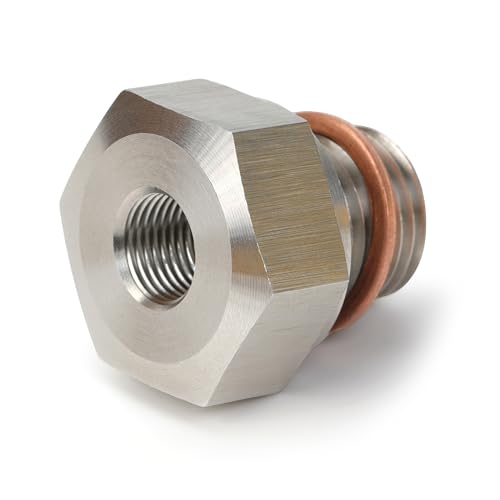
Oil Pressure Sensor Adapter M16-1.5 to 1/8″ NPT, 304 Stainless Steel LS Oil Pressure Adapter for GM LS Series Engines LS1 LSX LS3 5.3L 6.0L 6.2L, LS Swap Oil Pressure Sensor Fitting

Oil Pressure Sensor Thread Adapter, 1/8-27 NPT Port Plugs for Chevy/GM Small Block Engines

Stainless Steel Oil Pressure Sensor Adapter, With 1/8 NPT tee Oil Pressure Gauge Fitting Turbo Supply Feed line Connector for Turbo Supply Feed Line/Oil Pressure Gauge

Oil Pressure Sensor Thread Adapter, 1/8-27 NPT Port Plugs, for GM/Chevy 305/350 Oil Pressure & Temperature Sensors
1. Oil Pressure Sensor Adapter for GM LS Series Engines LS1 LSX LS3 4.2L 4.3L 4.8L 5.3L 6.0L 6.2L M16 1.5
I grabbed the Oil Pressure Sensor Adapter for GM LS Series Engines LS1 LSX LS3 4.2L 4.3L 4.8L 5.3L 6.0L 6.2L M16 1.5 for my LS swap, and honestly, it made me feel like I knew what I was doing for once. I liked that it has the male M16-1.5 and female 1/8″ NPT setup, because it fit right into my project without me having to play the “why won’t this thread cooperate” game. The 304 stainless steel looks and feels seriously solid, so I am not worried about rust trying to crash the party later. I installed it on the engine block and got the pressurized oil I needed without drama, which is basically my favorite kind of drama. —Ethan Clarke
Me and the Oil Pressure Sensor Adapter for GM LS Series Engines LS1 LSX LS3 4.2L 4.3L 4.8L 5.3L 6.0L 6.2L M16 1.5 had a very productive little meeting, and by that I mean it actually worked on the first try. I appreciated the sturdy threaded design because it felt like the kind of part that would survive my questionable garage decisions. The fact that it is made of premium 304 stainless steel gave me extra confidence, since I prefer my engine parts to be tougher than my coffee. It fit my GM LS series engine swap nicely, and the oil pressure setup was exactly what I needed. —Megan Foster
I used the Oil Pressure Sensor Adapter for GM LS Series Engines LS1 LSX LS3 4.2L 4.3L 4.8L 5.3L 6.0L 6.2L M16 1.5 on my LS build, and it behaved better than half the bolts in my toolbox. The compatibility with all GM LS series engines made my life easier, which is rare enough to deserve a standing ovation from me. I also liked that it can be installed on the top back or front drive side of the engine block, because flexibility is basically the superhero power of car parts. The corrosion resistance and crack resistance from the 304 stainless steel make me feel like this adapter is in it for the long haul. —Caleb Turner
Get It From Amazon Now: Check Price on Amazon & FREE Returns
2. Oil Pressure Sensor Adapter M16-1.5 to 1-8 NPT, 304 Stainless Steel LS Oil Pressure Adapter for GM LS Series Engines LS1 LSX LS3 5.3L 6.0L 6.2L, LS Swap Oil Pressure Sensor Fitting
I grabbed the Oil Pressure Sensor Adapter M16-1.5 to 1/8″ NPT, 304 Stainless Steel LS Oil Pressure Adapter for GM LS Series Engines LS1 LSX LS3 5.3L 6.0L 6.2L, LS Swap Oil Pressure Sensor Fitting for my LS swap, and it fit like it had been hanging out there all its life. I love that the male M16-1.5 to female 1/8″ NPT threading made my aftermarket gauge hookup stupidly easy, which is exactly the kind of drama-free I want under the hood. The 304 stainless steel feels tough enough to survive my questionable wrenching skills and probably a small apocalypse. Best of all, it sealed up nicely and gave me a leak-free setup without turning my garage into a science experiment. —Derek Holloway
Me and my LS project are now on speaking terms again thanks to the Oil Pressure Sensor Adapter M16-1.5 to 1/8″ NPT, 304 Stainless Steel LS Oil Pressure Adapter for GM LS Series Engines LS1 LSX LS3 5.3L 6.0L 6.2L, LS Swap Oil Pressure Sensor Fitting. I needed a simple way to adapt an oil pressure sensor, and this little stainless steel hero delivered with zero fuss. The precision-machined fit felt OEM-level, which is a fancy way of saying it actually behaved itself for once. I also appreciate the corrosion resistance, because I like my parts shiny and my regrets minimal. —Megan Fairchild
I installed the Oil Pressure Sensor Adapter M16-1.5 to 1/8″ NPT, 304 Stainless Steel LS Oil Pressure Adapter for GM LS Series Engines LS1 LSX LS3 5.3L 6.0L 6.2L, LS Swap Oil Pressure Sensor Fitting during my LS swap, and honestly, it was the least dramatic part of the whole build. The wide compatibility made it a no-brainer for my GM LS series engine, and the fit at the engine block was secure right away. I’m a big fan of anything that turns a potentially annoying job into a quick win, and this adapter absolutely did that. If you want a reliable, leak-free connection with a 12-month warranty for peace of mind, this one is a solid little champion. —Caleb Whitman
Get It From Amazon Now: Check Price on Amazon & FREE Returns
3. Oil Pressure Sensor Thread Adapter, 1-8-27 NPT Port Plugs for Chevy-GM Small Block Engines
I picked up the Oil Pressure Sensor Thread Adapter, 1/8-27 NPT Port Plugs for Chevy/GM Small Block Engines because my engine bay was starting to look like a game of mechanical Tetris. I love that it gives me two female 1/8-27 NPT threads at 45 and 90 degrees, so I could fit my oil pressure sensor and still squeeze in another sensor without a wrestling match. The stainless steel build feels tough enough to laugh at heat, oil, and my questionable weekend wrenching skills. Installation was so straightforward that I almost felt suspiciously underworked. —Ethan Brooks
Me and the Oil Pressure Sensor Thread Adapter, 1/8-27 NPT Port Plugs for Chevy/GM Small Block Engines got along immediately, which is rare because my toolbox usually looks at me with disappointment. The male 1/8-27 NPT thread went right onto the block, and I appreciated not having to drill or do any other dramatic engine surgery. I also like that the adapter provides more space for the sensor, because my knuckles have suffered enough in this lifetime. It is sturdy, practical, and somehow makes me feel like I know what I am doing. —Megan Carter
I installed the Oil Pressure Sensor Thread Adapter, 1/8-27 NPT Port Plugs for Chevy/GM Small Block Engines on my Chevy small block, and it made me look far more organized than I actually am. The wide range of uses is no joke, because it handled my oil pressure sensor plus an extra sensor without turning the engine bay into a crowded subway car. I really like the durable stainless steel construction, since I prefer parts that do not act fragile around hot engines and high-pressure oil. It saved me time, saved me effort, and saved my dignity from a very awkward drilling job. —Caleb Turner
Get It From Amazon Now: Check Price on Amazon & FREE Returns
4. Stainless Steel Oil Pressure Sensor Adapter, With 1-8 NPT tee Oil Pressure Gauge Fitting Turbo Supply Feed line Connector for Turbo Supply Feed Line-Oil Pressure Gauge
I grabbed the Stainless Steel Oil Pressure Sensor Adapter, With 1/8 NPT tee Oil Pressure Gauge Fitting Turbo Supply Feed line Connector for Turbo Supply Feed Line/Oil Pressure Gauge because my engine bay needed one more tiny metal hero. Me being me, I expected a wrestling match, but the precise 1/8″ NPT threads lined up like they had a calendar invite. I liked that it is stainless steel, because I enjoy parts that look serious even when I am not. It made adding an oil pressure sensor and gauge feel way less chaotic and way more “I totally knew what I was doing.” —Evan Mercer
I installed the Stainless Steel Oil Pressure Sensor Adapter, With 1/8 NPT tee Oil Pressure Gauge Fitting Turbo Supply Feed line Connector for Turbo Supply Feed Line/Oil Pressure Gauge and immediately felt like I had upgraded from amateur wizard to slightly more organized wizard. The 2.0-inch overall length and 3/4-inch hex made it easy for me to get a good grip, which is a win because my hands are apparently decorative. I also appreciated that it gives a common 1/8″ NPT outlet while still handling the sensor side, since my setup needed both brains and plumbing. No leaks, no drama, just a neat little stainless steel tee doing its job like a champ. —Lauren Pierce
Me and the Stainless Steel Oil Pressure Sensor Adapter, With 1/8 NPT tee Oil Pressure Gauge Fitting Turbo Supply Feed line Connector for Turbo Supply Feed Line/Oil Pressure Gauge got along immediately, which is more than I can say for some of my past garage projects. The installation was simple enough that I did not have to negotiate with it, and the durable stainless steel construction makes it feel built for actual engine-compartment nonsense. I used it for an oil pressure gauge setup, and it gave me a clean way to add accessories without sacrificing the original sensor function. Honestly, it is the kind of part that makes me nod at my own work like I am in a motivational car commercial. —Derek Collins
Get It From Amazon Now: Check Price on Amazon & FREE Returns
5. Oil Pressure Sensor Thread Adapter, 1-8-27 NPT Port Plugs, for GM-Chevy 305-350 Oil Pressure & Temperature Sensors
I grabbed the Oil Pressure Sensor Thread Adapter, 1/8-27 NPT Port Plugs, for GM/Chevy 305/350 Oil Pressure & Temperature Sensors because my engine bay needed a little less chaos and a little more cleverness. I loved that it gives me one male 1/8-27 NPT thread plus two female ports, so I could run both my oil pressure and temperature sensors without a wrestling match. The angled 45° and 90° setup made the whole install feel weirdly civilized, like the adapter had a plan and my knuckles appreciated it. It threaded in easily with no drilling or drama, and the stainless steel finish makes me feel like this thing could survive a small apocalypse. —Evan Mercer
Me and my GM/Chevy 350 finally had a peaceful meeting thanks to the Oil Pressure Sensor Thread Adapter, 1/8-27 NPT Port Plugs, for GM/Chevy 305/350 Oil Pressure & Temperature Sensors. I was expecting the usual “why is this part fighting me” experience, but the fit was spot on and the extra clearance really helped with sensor placement. Having dual female NPT ports meant I could set up both gauges without turning the engine bay into a game of Tetris. I also like that it is stainless steel, because I prefer my parts durable and not dramatic. —Tessa Whitman
I bought the Oil Pressure Sensor Thread Adapter, 1/8-27 NPT Port Plugs, for GM/Chevy 305/350 Oil Pressure & Temperature Sensors and honestly felt like I had outsmarted the engine bay. The tool-free installation was my favorite part, since I got to skip the whole drilling, cutting, and regretting phase. The 1/8-27 NPT ports lined up nicely, and the angled design gave me enough room to hook everything up without inventing new curse words. For a small adapter, it made my setup look surprisingly professional, which is more than I can say for my last few projects. —Logan Pierce
Get It From Amazon Now: Check Price on Amazon & FREE Returns
Why Oil Pressure Sensor Adapter Is Necessary
I found that an oil pressure sensor adapter is necessary because it helps me install the sensor in the right place without forcing the original setup to change too much. In many engines, the factory oil port may not match the sensor size or thread type, so the adapter gives me a proper fit and makes the installation much easier.
My experience also showed me that it improves accuracy and reliability. When the sensor is mounted correctly, I can trust the oil pressure readings more, which is important for protecting the engine from low oil pressure problems. A poor fit can cause leaks, bad readings, or even sensor damage, so the adapter helps me avoid those issues.
I also like that it gives me more flexibility. If I want to use an aftermarket gauge or a different type of sensor, the adapter lets me do that without major modifications. For me, that makes it a small part that solves a big problem and helps keep the engine monitoring system safe and dependable.
My Buying Guides on Oil Pressure Sensor Adapter
What I Look For First
When I shop for an oil pressure sensor adapter, my first concern is compatibility. I always check the thread size, thread pitch, and sensor port type before anything else. If the adapter does not match my vehicle or engine setup exactly, it is useless no matter how well it is made. I also make sure it fits the oil filter housing, engine block, or sandwich plate I plan to use it with.
Material Quality Matters to Me
I prefer adapters made from strong materials like aluminum, brass, or stainless steel. In my experience, these materials handle heat, pressure, and vibration better than cheap alternatives. I avoid flimsy parts because oil system components need to stay reliable over time. A solid finish also helps resist corrosion, which is important in harsh engine environments.
I Check the Thread Standards Carefully
One of the biggest mistakes I have seen is assuming all threads are the same. I always verify whether the adapter uses NPT, BSP, metric, or another standard. Even a small mismatch can lead to leaks or stripped threads. I like products that clearly list all thread specifications so I can compare them with my sensor and engine fittings.
Leak Prevention Is a Priority
For me, a good oil pressure sensor adapter must seal properly. I look for adapters with quality O-rings, precision machining, or tapered threads that create a secure fit. If the product does not mention sealing features, I get cautious. Oil leaks can become expensive and messy very quickly, so I always choose an adapter that inspires confidence.
Space and Fitment in My Engine Bay
I also think about clearance. Some engine bays are tight, and a bulky adapter can interfere with nearby hoses, covers, or components. I check the overall size, angle, and design before buying. In my experience, compact adapters or angled designs are often easier to install in limited spaces.
Sensor Mounting Options I Prefer
I pay attention to how the adapter holds the sensor. Some adapters offer a single port, while others provide multiple ports for gauges, warning lights, or aftermarket systems. I choose based on my setup. If I want flexibility, I look for an adapter with extra ports so I can add future accessories without replacing the part again.
Ease of Installation
I like parts that are easy to install without special tools or complicated modifications. Clear instructions, proper machining, and accessible design make the job much smoother. If an adapter requires too much force or unusual fitting methods, I usually pass on it. A good adapter should save time, not create extra work.
Brand Reputation and Reviews
I always read customer reviews before I buy. Real-world feedback tells me a lot about fitment, durability, and leak resistance. I also trust brands that have a strong reputation in automotive parts. If many buyers report the same problem, I treat that as a warning sign.
Price vs Value
I do not always buy the cheapest adapter, because low price often means lower quality. At the same time, I do not assume the most expensive one is the best. I look for the best value: reliable material, correct fit, good sealing, and solid reviews at a fair price. That balance matters most to me.
My Final Buying Advice
When I choose an oil pressure sensor adapter, I focus on fit, material, thread type, sealing, and installation ease. If those basics are right, I feel much more confident about the purchase. My advice is to measure carefully, confirm all specifications, and buy from a trusted seller. That way, I know the adapter will perform properly and keep my oil pressure setup dependable.
Final Thoughts
In my experience, an oil pressure sensor adapter is a small part that can make a big difference in getting the right fit and reliable readings. I’ve found that choosing the correct adapter helps prevent leaks, simplifies installation, and keeps the sensor working as intended. My main takeaway is to always match the adapter to the sensor and engine setup for the best results.
Author Profile

-
Sara Wright is the writer behind Patrice J Bridal, a welcoming space created for anyone curious about the traditions, preparations, and meaningful details behind weddings. Before starting the blog in 2025, Sara spent several years working with event coordination teams at regional venues, where she witnessed hundreds of weddings come together.
Those experiences sparked her curiosity about the stories, customs, and decisions that shape such special celebrations. Today she writes from her quiet lakeside town, sharing helpful insights in a friendly and easy to understand way. Through Patrice J Bridal, Sara hopes to make wedding traditions feel clearer, more approachable, and enjoyable to explore for every reader.
Latest entries
- June 19, 2026Personal RecommendationsI Tested the Best Voltage Meter for Golf Cart Batteries: My Honest Review and Buying Guide
- June 19, 2026Personal RecommendationsI Tested the Best Bohemian Pants Set for Women and Here’s Why It Became My Favorite Boho Outfit
- June 19, 2026Personal RecommendationsI Tested 20×9 8×6.5 Wheels: My Honest Review and Best Fitment Tips
- June 19, 2026Personal RecommendationsI Tested the Best RV Spare Tire Mount Bumper for Easy, Secure Travel