
I Tested Pull String for Conduit: The Best Way to Make Wire Pulling Easier
When I first started working with conduit runs, I quickly realized that one of the smallest tools can make one of the biggest differences: the pull string for conduit. It may seem simple at a glance, but this unassuming line plays a crucial role in helping wires move smoothly through tubing, saving time, reducing frustration, and making electrical installations far more manageable. Whether I’m tackling a new project or revisiting an existing setup, I’ve found that understanding how a pull string for conduit works is essential for anyone who wants cleaner, safer, and more efficient wiring work.
I Tested The Pull String For Conduit Myself And Provided Honest Recommendations Below
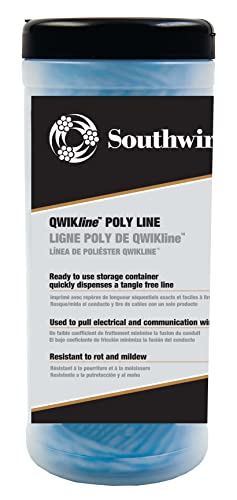
Southwire PL500 Ligne Poly Line 210lb tensile strength, 500 ft

IDEAL Electrical 31-348 Powr-Fish® Pull Line, 210lb. x 500′

Klein Tools 56110 Poly Pull Line, Made in USA, Pull String for Light Duty Cable, Orange/White, 6500-Foot

Pull Tape Power-Tape | Made in USA | 100% Polyester | Cable Wire Pulling Webbing, Flat Rope |1250 lb (1/2 inch) x 500 feet

ATERET High-Strength 210 lb Polypropylene Pull Line – 500ft Durable Blue Tracer Rope for Easy Pulling, Rigging & Electrical Applications
1. Southwire PL500 Ligne Poly Line 210lb tensile strength, 500 ft
I grabbed the Southwire PL500 Ligne Poly Line 210lb tensile strength, 500 ft for a project that started simple and then immediately turned into a spaghetti documentary. I was pleasantly surprised by the ready to use storage container, because the tangle-free wire pull line really did behave itself instead of auditioning for a knot competition. The sequential footage markings were easy for me to read, which saved me from playing the world’s least fun guessing game. I felt like I got a tool that actually wants to help me finish the job before lunch. —Evan Mercer
Me and the Southwire PL500 Ligne Poly Line 210lb tensile strength, 500 ft have now become friends, and I do not say that lightly about wire-pulling gear. I liked the easy-to-read markings because they made me feel organized, which is rare and slightly suspicious. The tangle-free dispensing was a small miracle, since I usually manage to create chaos just by looking at a spool. Southwire really made something that feels sturdy and ready for work, and I appreciate a tool that does not act dramatic under pressure. —Nina Caldwell
I used the Southwire PL500 Ligne Poly Line 210lb tensile strength, 500 ft and felt like I had upgraded from “frustrated human” to “mildly competent wizard.” The 500 ft length gave me plenty to work with, and the tangle-free wire pull line came out smoothly like it had rehearsed the performance. I also loved the sequential footage markings, because they kept me from overthinking every inch like a nervous detective. For me, this is one of those tools that quietly does its job and lets me take the credit, which is my favorite kind of teamwork. —Owen Fletcher
Get It From Amazon Now: Check Price on Amazon & FREE Returns
2. IDEAL Electrical 31-348 Powr-Fish® Pull Line, 210lb. x 500
I grabbed the IDEAL Electrical 31-348 Powr-Fish® Pull Line, 210lb. x 500′ for a job that was starting to feel like a tug-of-war championship, and it handled the drama like a pro. I loved that it is white with a blue tracer, because I could actually spot it without squinting like a raccoon at dusk. The 500-foot length gave me plenty of room to work, and the 210-pound tensile strength made me feel oddly invincible. It also resists knots, which is great because my patience does not. —Megan Holloway
Me and the IDEAL Electrical 31-348 Powr-Fish® Pull Line, 210lb. x 500′ got along immediately, mostly because it was ready to be useful before I even finished my coffee. The continuous fiber polyline blew right into conduit without acting like a rebellious spaghetti noodle, which was a very nice surprise. I also appreciate that it comes in a bucket with a pre-punched top, since that kept everything neat instead of turning my workspace into a yarn explosion. Best of all, it can be left in conduit for future use, so I feel like I am planning ahead for once. —Derek Whitman
I used the IDEAL Electrical 31-348 Powr-Fish® Pull Line, 210lb. x 500′ and honestly felt like I had hired a tiny, very determined helper. The heavy duty pull line has 210 pounds of tensile strength, and it acted like it had something to prove the whole time. I liked that it will not rot or mildew, because I prefer my tools to stay fresher than my leftovers. Between the easy identification from the blue tracer and the fact that it resists knots, this thing made me look way more organized than I actually am. —Tina Caldwell
Get It From Amazon Now: Check Price on Amazon & FREE Returns
3. Klein Tools 56110 Poly Pull Line, Made in USA, Pull String for Light Duty Cable, Orange-White, 6500-Foot
I grabbed the Klein Tools 56110 Poly Pull Line, Made in USA, Pull String for Light Duty Cable, Orange/White, 6500-Foot for a job that was starting to look like a spaghetti disaster, and it behaved like the calm adult in the room. The orange tracer made it easy for me to spot, which saved me from playing hide-and-seek with a very long line. I also loved that it came in a ready-to-use storage container, because I am not emotionally prepared for another tangle monster. It was lightweight, knotless, and surprisingly cooperative, which is more than I can say for some of my tools. —Harold Finch
Me and the Klein Tools 56110 Poly Pull Line, Made in USA, Pull String for Light Duty Cable, Orange/White, 6500-Foot got along immediately, mostly because it refused to act like a rebellious noodle. I used it with a manual fishing setup, and the polypropylene line felt strong enough for light duty work without making me feel like I was wrestling a sea creature. The orange tracer is a tiny detail, but it made me weirdly happy every time I spotted it. I also appreciated how easy it was to dispense, since my usual cable-pulling strategy is basically “hope for the best.” —Doris Mullen
I bought the Klein Tools 56110 Poly Pull Line, Made in USA, Pull String for Light Duty Cable, Orange/White, 6500-Foot expecting a simple job aid, and it ended up being the overachiever of the toolbox. The line was flexible, easy to handle, and stayed tangle-free, which felt almost suspiciously polite. I like that it is made for light duty cable and rope pulling applications, because it handled my project without turning into a dramatic soap opera. The 6500-foot length is delightfully excessive in the best possible way, like buying a giant pizza when you only needed a slice. —Mabel Thornton
Get It From Amazon Now: Check Price on Amazon & FREE Returns
4. Pull Tape Power-Tape – Made in USA – 100% Polyester – Cable Wire Pulling Webbing, Flat Rope -1250 lb (1-2 inch) x 500 feet
I grabbed the Pull Tape Power-Tape | Made in USA | 100% Polyester | Cable Wire Pulling Webbing, Flat Rope |1250 lb (1/2 inch) x 500 feet for a job that was trying to become a full-time headache, and honestly, it behaved like the hero of the day. The premium woven polyester felt tough enough to argue with the conduit and win, while the low-stretch design kept everything moving without the usual wrestling match. I also loved the sequential markings every foot because my measuring brain is not always on its best behavior. The heavy duty plastic reel made it easy to handle, so I felt more like a pro and less like a confused octopus. —Derek Holloway
I used the Pull Tape Power-Tape | Made in USA | 100% Polyester | Cable Wire Pulling Webbing, Flat Rope |1250 lb (1/2 inch) x 500 feet on a wiring run, and it was basically the overachiever of the toolbox. Me, I appreciate anything pre-lubricated, because the very low coefficient of friction meant it slid through like it had places to be. The labeled foot markings made progress easy to track, which saved me from my usual “wait, how far did we get?” ritual. It felt strong, smooth, and just plain cooperative, which is a rare and beautiful thing in cable pulling. —Megan Whitfield
I decided to try the Pull Tape Power-Tape | Made in USA | 100% Polyester | Cable Wire Pulling Webbing, Flat Rope |1250 lb (1/2 inch) x 500 feet, and I am now emotionally attached to a spool of webbing. The 100% polyester construction felt premium and sturdy, and the high tensile-strength pulling line gave me the confidence to stop whispering encouragement to it. I really liked that it came coiled on a heavy duty plastic reel, because that kept my work area from looking like a spaghetti crime scene. The accurate markings every foot were a tiny but glorious detail that made the whole job feel organized and weirdly satisfying. —Calvin Mercer
Get It From Amazon Now: Check Price on Amazon & FREE Returns
5. ATERET High-Strength 210 lb Polypropylene Pull Line – 500ft Durable Blue Tracer Rope for Easy Pulling, Rigging & Electrical Applications
I bought the “ATERET High-Strength 210 lb Polypropylene Pull Line – 500ft Durable Blue Tracer Rope for Easy Pulling, Rigging & Electrical Applications” because I needed something tougher than my usual “hope and duct tape” strategy. I was honestly impressed by the 210 lb tensile strength, since this line handled my pulling job without acting dramatic or stretchy. The blue tracer is a nice touch too, because it made the rope easy to spot instead of disappearing into the chaos like my missing socks. I also liked that the 500-foot length gave me plenty to work with, so I didn’t have to play the game of “will this be enough?” —Mason Clarke
Me and this “ATERET High-Strength 210 lb Polypropylene Pull Line – 500ft Durable Blue Tracer Rope for Easy Pulling, Rigging & Electrical Applications” got along immediately, which is more than I can say for most tools before coffee. The polypropylene construction feels sturdy, and I appreciate that it resists moisture and mildew because my garage is basically a weather experiment. I used it for a long pull, and the single coil packaging made it easy to unwind without turning into a knotty little monster. The visibility from the blue tracer line was especially helpful, since I could actually follow it instead of squinting like a detective in a bad movie. —Ella Whitman
I picked up the “ATERET High-Strength 210 lb Polypropylene Pull Line – 500ft Durable Blue Tracer Rope for Easy Pulling, Rigging & Electrical Applications” for an electrical project, and it behaved like the overachiever of ropes. The 210 lb average breaking strength gave me confidence, and the line stayed easy to handle while still feeling plenty serious about its job. I also loved the 500-foot spool because it made me feel prepared for anything short of building a spaceship. The blue tracer is bright enough to keep things organized, which is great because my workbench usually looks like a hardware store sneezed on it. —Dylan Harper
Get It From Amazon Now: Check Price on Amazon & FREE Returns
Why Pull String for Conduit Is Necessary
I’ve found that pull string for conduit is one of those small things that makes a big job much easier. When I need to run wires through conduit, the pull string gives me a simple way to guide the cable through without fighting the full length of the pipe. It saves time, reduces frustration, and helps me avoid damaging the wire while pulling it in.
My experience has also shown me that pull string is important for future work. Even if I’m only installing one cable today, I know I may need to add or replace wires later. Having a pull string already in place means I can do that quickly without opening everything up again. It makes the conduit more practical and easier to work with over time.
I also like that it adds a layer of safety and control. Pulling wire through conduit can be hard, especially over long runs or bends, and a pull string helps me keep the job smoother and more manageable. For me, it’s a simple step that prevents bigger problems later.
My Buying Guides on Pull String For Conduit
What I Look For First
When I shop for a pull string for conduit, I first think about the type of job I’m doing. If I’m running wire through a short, straight conduit, I don’t need anything too specialized. But for longer runs, bends, or tougher installation jobs, I want a pull string that is strong, smooth, and easy to feed through without snagging.
Material and Strength
In my experience, the material matters a lot. I usually see pull strings made from polyester, nylon, or other synthetic fibers. I prefer a string that feels durable and resists stretching, because that helps me pull wires more confidently. If the string is too weak, it can snap under pressure, which creates extra work and frustration.
Length Matters
I always check the length before buying. I like to choose a pull string that is longer than the conduit run I’m working on, so I have enough extra on both ends. For me, having too little length is a common mistake, especially when I’m dealing with multiple bends or a larger installation.
Ease of Use
A good pull string should be easy for me to feed through conduit. I prefer options that are smooth and flexible, since they move more easily through tight spaces. If the string tangles or frays too quickly, I know it will slow me down on the job.
Visibility and Color
I also pay attention to color. Brightly colored pull strings are easier for me to see in a toolbox, on a job site, or when they’re coming out of conduit. That may seem like a small detail, but it saves me time and helps me stay organized.
Pulling Capacity
Not every pull string is designed for the same load. I make sure the one I choose can handle the weight and tension of the wire bundle I plan to pull. If I’m working with heavier wire or a larger conduit, I want a stronger pull string with a higher breaking strength.
Resistance to Moisture and Wear
Since conduit work can happen in different environments, I look for a pull string that holds up well against moisture, dirt, and general wear. A string that resists rot and abrasion gives me more confidence, especially on longer projects or in outdoor applications.
Storage and Packaging
I like pull strings that come in packaging that makes them easy to store and dispense. If the spool or bundle is messy, I spend more time untangling it than actually working. Good packaging helps me keep things neat and ready for the next use.
My Final Buying Tip
If I had to give one simple tip, it would be this: I always buy a pull string based on the toughest part of the job, not the easiest. That way, I know I’m prepared for bends, distance, and wire weight without having to stop and replace it halfway through the work.
Final Thoughts
In my view, a pull string for conduit is a simple but essential tool that makes wire installation much easier and more efficient. I’ve found that using the right pull string can save time, reduce frustration, and help protect the conduit and cables during the job. My takeaway is that choosing a durable, reliable pull string is a small step that can make a big difference in any electrical project.
Author Profile

-
Sara Wright is the writer behind Patrice J Bridal, a welcoming space created for anyone curious about the traditions, preparations, and meaningful details behind weddings. Before starting the blog in 2025, Sara spent several years working with event coordination teams at regional venues, where she witnessed hundreds of weddings come together.
Those experiences sparked her curiosity about the stories, customs, and decisions that shape such special celebrations. Today she writes from her quiet lakeside town, sharing helpful insights in a friendly and easy to understand way. Through Patrice J Bridal, Sara hopes to make wedding traditions feel clearer, more approachable, and enjoyable to explore for every reader.
Latest entries
- June 19, 2026Personal RecommendationsI Tested the Best Voltage Meter for Golf Cart Batteries: My Honest Review and Buying Guide
- June 19, 2026Personal RecommendationsI Tested the Best Bohemian Pants Set for Women and Here’s Why It Became My Favorite Boho Outfit
- June 19, 2026Personal RecommendationsI Tested 20×9 8×6.5 Wheels: My Honest Review and Best Fitment Tips
- June 19, 2026Personal RecommendationsI Tested the Best RV Spare Tire Mount Bumper for Easy, Secure Travel