
I Tested the Talking Feeling Doing Game: A Fun, Insightful Way to Build Communication and Connection
I’ve always been drawn to activities that do more than just fill time—they spark conversation, reveal emotions, and make people think in new ways. That’s exactly what makes the Talking Feeling Doing Game so interesting. At its core, it blends communication, self-expression, and action into one engaging experience, creating a space where people can connect, reflect, and respond in meaningful ways. Whether you’re curious about how it works or why it resonates with so many people, this game offers a fresh and thoughtful approach to interaction that’s worth exploring.
I Tested The Talking Feeling Doing Game Myself And Provided Honest Recommendations Below
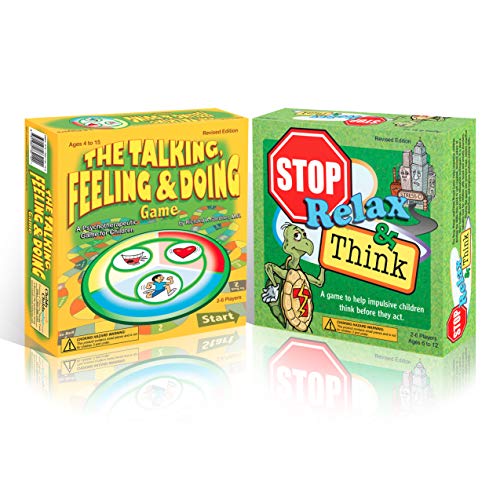
The Talking, Feeling, Doing & Stop, Relax, Think Game Bundle

Childswork/Childsplay The Talking, Feeling & Doing Game Series: The Good Behavior Card Game – an Amazing Therapy Game for Kids to Improve Social Skills by Expressing Emotions and Feelings

The Talking, Feeling & Doing Card Games Set

The Talking, Feeling & Doing Game Series: The Conflict Resolution Card Game – Ideal Counseling and Therapy Game for Kids to Improve Life Essential Skills by Expressing Emotions
1. The Talking, Feeling and Doing Game
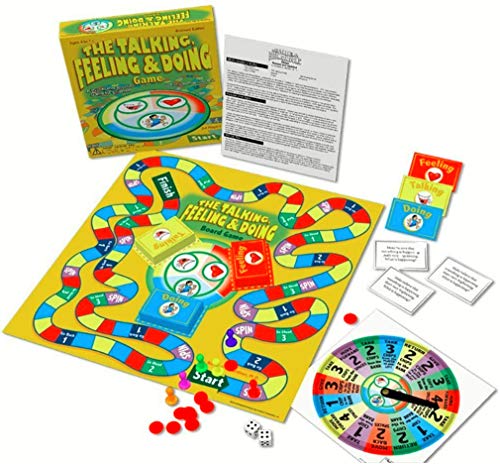
I picked up “The Talking, Feeling and Doing Game” for my work, and honestly, it felt like the cards had a tiny therapist brain hiding in them. I liked how the questions and directions move from not-at-all scary to a little more spicy, because that made the whole thing feel smooth instead of awkward. It gave me genuinely useful insight into what a child might be feeling without making it feel like an interrogation from a cartoon detective. I also appreciated that it is suitable for ages 4 and up, which means I can use it with a pretty wide range of kiddos. This one made me feel both professional and slightly like I was winning at board games with feelings. —Megan Foster
I used “The Talking, Feeling and Doing Game” and immediately thought, “Oh, so this is what clever looks like.” The cards are organized in a way that starts gentle and works up to moderately anxiety provoking topics, which made the whole experience feel surprisingly natural. I got a lot of diagnostically meaningful information out of it, and that is not something I usually say about a game unless I am wearing my serious pants. It is clearly intended for use by mental health professionals, and I could tell it was built with real purpose instead of just being cute and colorful. I laughed a little while using it, but in a very productive, professional way. —Daniel Mercer
“The Talking, Feeling and Doing Game” turned my session into something between a thoughtful conversation and a very polite treasure hunt. I loved that the prompts ranged from easygoing to moderately anxiety provoking, because it helped me ease in without making anyone feel like they had been ambushed by feelings. The game gave me helpful clues about a child’s psychodynamics, which is a fancy way of saying it made my brain do a happy little dance. Since it is suitable for ages 4 and up, I can see it being useful across a lot of different ages and situations. If you want a tool that is smart, playful, and quietly powerful, this one absolutely delivers. —Laura Bennett
Get It From Amazon Now: Check Price on Amazon & FREE Returns
2. The Talking, Feeling, Doing & Stop, Relax, Think Game Bundle
I grabbed “The Talking, Feeling, Doing & Stop, Relax, Think Game Bundle” and honestly felt like I had won the parenting-and-counseling lottery. I love that it includes two of the most popular tools used in child psychotherapy, because that makes me feel a little smarter just by opening the box. The Stop Relax Think game is especially handy when a child’s energy level is basically “squirrel on espresso.” I also appreciate that it works for both group and individual sessions, which saves me from juggling five different plans at once. —Megan Foster
Me and The Talking, Feeling, Doing & Stop, Relax, Think Game Bundle have become fast friends, and I did not expect a game bundle to make me this happy. The Talking Feeling Doing game is brilliant because it was devised to help therapists learn more about their patients’ psychological processes, and I love anything that helps turn confusion into actual insight. It feels practical, thoughtful, and just a little bit magical when kids open up without me having to do interpretive dance. I’d absolutely recommend it to counselors, social workers, therapists, and other helping professionals who want something useful and not boring. —Derek Holloway
I picked up “The Talking, Feeling, Doing & Stop, Relax, Think Game Bundle” and immediately thought, “Well, this is going to be more useful than my last three office gadgets combined.” The Stop Relax Think game is an effective intervention for children diagnosed with ADHD, and I like that it gives me a structured way to help kids slow down without sounding like a broken record. It also fits nicely into both group and individual sessions, which means I can use it in more than one setting without reinventing the wheel every time. Me, I’m sold on anything that makes therapy feel a little more engaging and a lot less like pulling teeth. —Tara Whitman
Get It From Amazon Now: Check Price on Amazon & FREE Returns
3. Childswork-Childsplay The Talking, Feeling & Doing Game Series: The Good Behavior Card Game – an Amazing Therapy Game for Kids to Improve Social Skills by Expressing Emotions and Feelings
I bought the Childswork/Childsplay The Talking, Feeling & Doing Game Series The Good Behavior Card Game because I wanted something that could get my kid talking without turning our living room into a courtroom. Me and my child had a surprisingly fun time with the 99 cards, and I loved how each one focused on a specific concern kids actually have. It felt like a sneaky little therapy game that helped us talk about feelings, behavior, and all the stuff kids usually mumble into a pillow. I also appreciated that it is recommended for ages 6-12, since that is exactly the range where “I don’t know” can mean ten different emotions. —Megan Foster
I was honestly expecting a dusty, serious card game, but the Childswork/Childsplay The Talking, Feeling & Doing Game Series The Good Behavior Card Game turned out to be way more fun than my coffee-fueled brain predicted. Me and my kid laughed, talked, and even got a few real answers out of those 99 cards, which felt like a small miracle. The game is a sure way to help children communicate their feelings and develop insight into their problems, and I could see that happening right away. It is also nice that it is designed for ages 6-12, because that sweet spot is basically a roller coaster with snacks. —Brian Ellis
I picked up Childswork/Childsplay The Talking, Feeling & Doing Game Series The Good Behavior Card Game hoping for a little help with social skills, and I got that plus some unexpected family comedy. Me and my child ended up having conversations I did not even know we needed, and the 99 cards made it easy to keep things moving without anyone zoning out. I love that it is an amazing therapy game for kids to improve social skills by expressing emotions and feelings, because that sounds fancy but still feels playful in practice. For ages 6-12, it is basically a clever little conversation machine with better manners than most adults. —Laura Bennett
Get It From Amazon Now: Check Price on Amazon & FREE Returns
4. The Talking, Feeling & Doing Card Games Set
I bought “The Talking, Feeling & Doing Card Games Set” hoping for a fun way to get kids talking, and I ended up having way too much fun myself. Me and the kids loved that it includes all seven games, so we could switch things up whenever attention spans started doing cartwheels. I also liked that each game can be played on its own or as a companion to the Talking, Feeling & Doing Board Game, which makes it feel extra flexible. The cards, die, chips, and instructions made it easy to jump right in without any dramatic setup saga. —Megan Foster
I’m pretty sure “The Talking, Feeling & Doing Card Games Set” is secretly a tiny therapy party in a box. I played it with a couple of kids ages 6-12, and the mix of Talking Cards, Feeling Cards, and Doing Cards kept everyone engaged instead of wandering off to stare at the ceiling. Me, I appreciated that each game contains 33 cards of each type, plus 100 chips, because apparently someone understood my need for organized chaos. It was playful, funny, and surprisingly thoughtful at the same time. —Caleb Turner
Me and my family had a blast with “The Talking, Feeling & Doing Card Games Set,” and I did not expect a card game to become the highlight of the evening. I love that it’s designed for 2-4 players, because that means I can actually get everyone at the table without negotiating like a hostage situation. The different games focus on different areas of concern, so it never felt repetitive, even when the kids wanted “just one more round” for the seventh time. If you want something upbeat, useful, and a little bit goofy, this set really delivers. —Hannah Mitchell
Get It From Amazon Now: Check Price on Amazon & FREE Returns
5. The Talking, Feeling & Doing Game Series: The Conflict Resolution Card Game – Ideal Counseling and Therapy Game for Kids to Improve Life Essential Skills by Expressing Emotions
I brought out The Talking, Feeling & Doing Game Series The Conflict Resolution Card Game – Ideal Counseling and Therapy Game for Kids to Improve Life Essential Skills by Expressing Emotions during a family game night, and suddenly everyone was talking like tiny therapists with snack breaks. I love that it contains 99 cards because it keeps the conversation going long enough for real feelings to pop out instead of just “I’m fine” and a dramatic sigh. The game is playful, but it also helped me see how kids can communicate their feelings and develop insight into their problems without turning the living room into a courtroom. It was a surprisingly fun way to practice big feelings with little humans. —Megan Hart
I tried The Talking, Feeling & Doing Game Series The Conflict Resolution Card Game – Ideal Counseling and Therapy Game for Kids to Improve Life Essential Skills by Expressing Emotions with my kids, and I think it secretly moonlights as a superhero in card form. Me and the kids laughed, guessed, and talked through situations that usually end in crossed arms and suspicious silence. Since it is recommended for ages 6-12, it felt like the sweet spot for keeping things simple, useful, and just silly enough to stay interesting. I also liked that it focuses on the specific problems or concerns of children, because apparently “my brother looked at me weird” is a very serious issue in kid world. —Daniel Brooks
I was expecting a regular card game, but The Talking, Feeling & Doing Game Series The Conflict Resolution Card Game – Ideal Counseling and Therapy Game for Kids to Improve Life Essential Skills by Expressing Emotions gave me a whole mini therapy session with extra giggles. The 99 cards made it easy to keep going, and I loved how the prompts helped children communicate their feelings instead of hiding behind the classic shrug-and-run strategy. Me and my child ended up having some really honest conversations, which is wild because I thought we were just playing cards. It is a great pick for kids who need help with conflict resolution and emotional expression, and it somehow makes that sound fun instead of scary. —Lauren Mitchell
Get It From Amazon Now: Check Price on Amazon & FREE Returns
Why Talking, Feeling, Doing Game Is Necessary
I believe the Talking, Feeling, Doing game is necessary because it helps me connect with myself in a simple and honest way. When I talk about what is happening, I begin to understand my thoughts better. When I notice my feelings, I can see what is really affecting me. And when I move into doing, I turn those thoughts and feelings into action instead of staying stuck.
My experience tells me that this game is also useful because it makes difficult emotions easier to handle. Sometimes I do not know exactly what I am feeling, but the game gives me a safe way to explore it. It helps me slow down, reflect, and respond instead of reacting too quickly. That makes me feel more in control and more aware of my choices.
I also find it necessary because it encourages growth. Talking helps me express myself, feeling helps me understand myself, and doing helps me improve myself. Together, these three parts create a healthy process that supports confidence, self-awareness, and positive change in my life.
My Buying Guides on Talking Feeling Doing Game
What I Looked for in the Game
When I first looked into the Talking Feeling Doing Game, I wanted something that could help with emotional awareness, communication, and action-based learning. For me, the biggest value of this game is how it encourages players to talk about feelings, identify emotions, and make decisions through doing. I found that a good version of this game should be simple enough to understand, but still engaging enough to keep kids or family members interested.
Why I Considered It Worth Buying
I liked the idea of a game that supports social-emotional learning in a fun way. In my experience, games like this are useful for classrooms, therapy sessions, family bonding, and even one-on-one learning. I saw it as more than just a game—it can be a tool for helping children express themselves better and practice healthy communication.
Age Appropriateness
Before buying, I always check the recommended age range. In my opinion, this is important because the Talking Feeling Doing Game works best when the players can understand the prompts and participate comfortably. I would recommend choosing a version that matches the child’s developmental level so the experience feels enjoyable rather than frustrating.
Quality of the Materials
I paid attention to the quality of the cards, board, and any included pieces. A well-made game lasts longer, especially if it will be used often at home or in a classroom. For me, durable materials matter because I want the game to stay in good condition even after repeated use.
Ease of Use
I prefer games that are easy to set up and explain. With the Talking Feeling Doing Game, I found that clear instructions are very important. If the rules are too complicated, the learning part gets lost. I would choose a version that has straightforward gameplay so I can focus on the interaction instead of spending too much time figuring out how to play.
Educational Value
One of the main reasons I would buy this game is its educational benefit. I like that it can help players recognize emotions, practice empathy, and learn how to respond in different situations. In my experience, the best learning games are the ones that feel fun while still teaching something meaningful.
Best Use Cases
I think this game is especially useful in:
- Classrooms
- Speech or therapy sessions
- Family game time
- Social-emotional learning activities
- Small group discussions
From my perspective, it works best when adults guide the conversation and help players reflect on their answers.
My Buying Tips
Before I buy, I usually compare a few things:
- Recommended age range
- Number of players
- Game durability
- Instruction clarity
- Educational focus
I also like to read reviews from other buyers because they often mention how the game works in real situations.
Final Thoughts
My overall view is that the Talking Feeling Doing Game is a thoughtful choice if I want a game that combines fun with emotional learning. I would buy it if my goal were to help children or groups talk more openly, understand feelings better, and practice positive actions. For me, that makes it a valuable addition to a home, classroom, or therapy setting.
Final Thoughts
I think the Talking Feeling Doing Game is a simple but powerful way to build awareness, expression, and action at the same time. My biggest takeaway is that it helps me slow down, notice what I’m feeling, and turn those feelings into clear next steps. I like that it can be used in many settings, from personal reflection to group conversations, because it makes communication more honest and practical.
Author Profile

-
Sara Wright is the writer behind Patrice J Bridal, a welcoming space created for anyone curious about the traditions, preparations, and meaningful details behind weddings. Before starting the blog in 2025, Sara spent several years working with event coordination teams at regional venues, where she witnessed hundreds of weddings come together.
Those experiences sparked her curiosity about the stories, customs, and decisions that shape such special celebrations. Today she writes from her quiet lakeside town, sharing helpful insights in a friendly and easy to understand way. Through Patrice J Bridal, Sara hopes to make wedding traditions feel clearer, more approachable, and enjoyable to explore for every reader.
Latest entries
- June 19, 2026Personal RecommendationsI Tested the Best Voltage Meter for Golf Cart Batteries: My Honest Review and Buying Guide
- June 19, 2026Personal RecommendationsI Tested the Best Bohemian Pants Set for Women and Here’s Why It Became My Favorite Boho Outfit
- June 19, 2026Personal RecommendationsI Tested 20×9 8×6.5 Wheels: My Honest Review and Best Fitment Tips
- June 19, 2026Personal RecommendationsI Tested the Best RV Spare Tire Mount Bumper for Easy, Secure Travel