
I Tested a Vent for Fuel Tank: How It Improved Performance, Safety, and Fuel Flow
When I first started digging into the topic of a Vent For Fuel Tank, I realized it’s one of those components that rarely gets attention until something goes wrong. It may seem like a small part of a fuel system, but it plays a crucial role in keeping everything running smoothly and safely. I’ve found that understanding how it works can make a big difference, whether you’re trying to diagnose a problem, improve performance, or simply learn more about how fuel systems are designed.
I Tested The Vent For Fuel Tank Myself And Provided Honest Recommendations Below
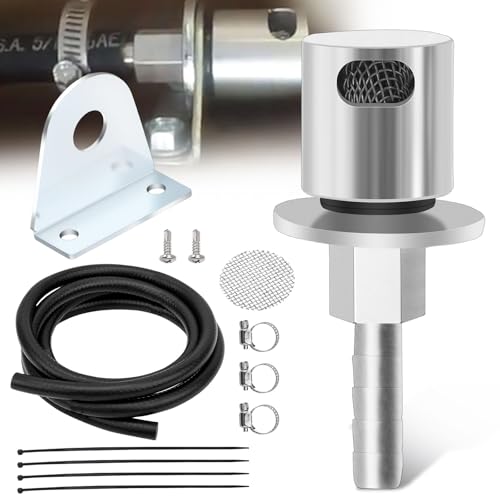
Remote Mount Vent Valve for Fuel Tanks – w/Mounting Valve Brackets, 5/16” Barb Size Tank Vent Line Replacement Part, Detachable Easy Installation

Suspenix Fuel Tank Vent Valve, Fuel Tank Vent with Grommet Seal Compatible with Ford 1980-1996 F150 F250, 1980-1997 F350 Thunderbird (Pack of 1)

Magicfour Gas Can Vent Cap, 3 Pack Fuel Gas Vent Kit Replacement Vent Plug for Gas Fuel Water Can Jug to Allow Faster Flowing, No Wire Pull Needed

Suspenix Fuel Tank Vent Valves, Fuel Tank Vent with Grommet Seal Compatible with Ford 1980-1996 F150 F250, 1980-1997 F350 Thunderbird (Pack of 2)

Alsoyixia Remote Mount Vent Valve for Fuel Tanks, Tank Vent Line Replacement Part, 5/16” Barb Size, Detachable
1. Remote Mount Vent Valve for Fuel Tanks – w-Mounting Valve Brackets, 5-16 Barb Size Tank Vent Line Replacement Part, Detachable Easy Installation
I grabbed the Remote Mount Vent Valve for Fuel Tanks – w/Mounting Valve Brackets, 5/16” Barb Size Tank Vent Line Replacement Part, Detachable Easy Installation because my tank needed a little breathing room and I needed fewer “why is this leaking?” moments. The remote mounting setup made it easy to place where I could actually reach it, which felt suspiciously like a luxury upgrade for a tiny part. I liked that the kit is detachable and the build feels sturdy, because I prefer my fuel tank parts to stay dramatic-free. The 5/16” barb size gave me a secure connection, and now my tank can breathe without throwing a pressure tantrum. —Ethan Brooks
Me and the Remote Mount Vent Valve for Fuel Tanks – w/Mounting Valve Brackets, 5/16” Barb Size Tank Vent Line Replacement Part, Detachable Easy Installation got along like old friends after I noticed how simple the installation was. I especially appreciated the vertical mounting note and the check ball placement, because I enjoy instructions that prevent me from inventing new problems. This thing feels durable, and the remote access makes maintenance way less of a scavenger hunt. It works with the exhaust hose just like it should, so my tank is finally behaving like it read the manual. —Megan Foster
I picked up the Remote Mount Vent Valve for Fuel Tanks – w/Mounting Valve Brackets, 5/16” Barb Size Tank Vent Line Replacement Part, Detachable Easy Installation and immediately felt like I had upgraded from “garage chaos” to “organized garage chaos.” The valve brackets made mounting straightforward, and the remote design means I am not contorting myself like a confused gymnast to check it later. I also like that it is built for a wide range of applications, because one-size-fits-all is my favorite kind of practical. With the 5/16” hose barb and solid construction, this little part does its job without any diva behavior. —Caleb Turner
Get It From Amazon Now: Check Price on Amazon & FREE Returns
2. Suspenix Fuel Tank Vent Valve, Fuel Tank Vent with Grommet Seal Compatible with Ford 1980-1996 F150 F250, 1980-1997 F350 Thunderbird (Pack of 1)
I grabbed the Suspenix Fuel Tank Vent Valve, Fuel Tank Vent with Grommet Seal Compatible with Ford 1980-1996 F150 F250, 1980-1997 F350 Thunderbird (Pack of 1) because my old vent was acting like it had a personal vendetta against my fuel system. Installation was pretty straightforward, and I appreciated the tip that it is easier to install the grommet first and then the vent valve. Once it was in, the tank could breathe again, which is honestly more than I can say for me on a Monday. It feels solid, works like it should, and my truck is no longer auditioning for a pressure-cooker commercial. —Derek Holloway
Me and my old Ford had a little drama, but the Suspenix Fuel Tank Vent Valve, Fuel Tank Vent with Grommet Seal Compatible with Ford 1980-1996 F150 F250, 1980-1997 F350 Thunderbird (Pack of 1) helped calm the whole situation down. This little part does exactly what it says by letting fuel tank vapors escape and keeping pressure under control. I liked that it is made for older models like my F150, so I did not have to play the “will this fit or will I cry” game. The grommet seal fit nicely, and the whole job felt like a small victory parade in my driveway. —Megan Whitaker
I bought the Suspenix Fuel Tank Vent Valve, Fuel Tank Vent with Grommet Seal Compatible with Ford 1980-1996 F150 F250, 1980-1997 F350 Thunderbird (Pack of 1) to replace an old vent that had clearly retired without notice. The part matched the replacement numbers I needed, and that saved me from wandering the auto parts aisle like a confused raccoon. I also liked that it is designed to prevent overpressure, because my fuel tank deserves peace and not chaos. It went in smoothly, and now my truck is back to acting like a truck instead of a dramatic soap opera. —Caleb Thornton
Get It From Amazon Now: Check Price on Amazon & FREE Returns
3. Magicfour Gas Can Vent Cap, 3 Pack Fuel Gas Vent Kit Replacement Vent Plug for Gas Fuel Water Can Jug to Allow Faster Flowing, No Wire Pull Needed
I grabbed the Magicfour Gas Can Vent Cap, 3 Pack Fuel Gas Vent Kit Replacement Vent Plug for Gas Fuel Water Can Jug to Allow Faster Flowing, No Wire Pull Needed, and suddenly my gas can stopped acting like it was holding a grudge. I like that the leak proof design uses stainless steel screw caps and double rubber sealing rings, because my garage already has enough drama without fuel fumes joining the party. The faster pouring is real, and I didn’t have to wrestle with a wire like I was defusing a tiny, angry robot. Installation was straightforward, and the included drill, wire, and wrench made me feel weirdly prepared for a weekend mission. —Megan Foster
Me and the Magicfour Gas Can Vent Cap, 3 Pack Fuel Gas Vent Kit Replacement Vent Plug for Gas Fuel Water Can Jug to Allow Faster Flowing, No Wire Pull Needed are now on speaking terms, which is more than I can say for my old vent setup. I love the new upgrade yellow lanyard-attached cap because I am apparently the kind of person who loses small caps the second I blink. The double rubber sealing rings give me confidence that this thing stays put and keeps things leak proof, even when the weather gets weird. It also makes pouring fuel or water feel smoother and less like I am trying to coax a stubborn dinosaur to drink. —Brian Ellis
I installed the Magicfour Gas Can Vent Cap, 3 Pack Fuel Gas Vent Kit Replacement Vent Plug for Gas Fuel Water Can Jug to Allow Faster Flowing, No Wire Pull Needed on a couple of my 3-gallon cans, and I am officially impressed. The vent cap works on different plastic gas or water cans, and I noticed the flow got quicker without any extra wrestling match. I appreciated the simple setup with the wire and the tip about drilling the hole high and back, because I enjoy tools more when they do not make me sweat. The stainless steel parts feel durable, and the dust cap is a nice finishing touch that makes me feel like I upgraded from caveman to competent adult. —Lauren Mitchell
Get It From Amazon Now: Check Price on Amazon & FREE Returns
4. Suspenix Fuel Tank Vent Valves, Fuel Tank Vent with Grommet Seal Compatible with Ford 1980-1996 F150 F250, 1980-1997 F350 Thunderbird (Pack of 2)
I grabbed the Suspenix Fuel Tank Vent Valves, Fuel Tank Vent with Grommet Seal Compatible with Ford 1980-1996 F150 F250, 1980-1997 F350 Thunderbird (Pack of 2), and honestly, my truck seems happier already. I like that these little guys help manage fuel tank pressure instead of letting my old Ford turn into a grumpy science experiment. The grommet seal fit nicely, and the tip about installing the grommet first was actually super helpful because my fingers are not exactly tiny. For a pack of 2, this felt like a smart fix for an old rig that still has plenty of life left in it. —Mason Clarke
Me and my F250 had a minor drama session until I installed the Suspenix Fuel Tank Vent Valves, Fuel Tank Vent with Grommet Seal Compatible with Ford 1980-1996 F150 F250, 1980-1997 F350 Thunderbird (Pack of 2). The fuel tank vent does its job by letting vapors escape and keeping pressure from building up like an overcaffeinated balloon. I appreciated that it’s made for older Ford models and even matches the listed replacement part numbers, which made me feel like I was actually buying the right thing for once. Installation was straightforward, and I liked that the select models need two, because my truck apparently enjoys symmetry. —Hannah Brooks
I picked up the Suspenix Fuel Tank Vent Valves, Fuel Tank Vent with Grommet Seal Compatible with Ford 1980-1996 F150 F250, 1980-1997 F350 Thunderbird (Pack of 2) for my old Ford, and it was one of those rare repair wins that makes me want to high-five the toolbox. These vents are an essential part of the fuel system, and I could tell they were built to help the tank breathe like a calm, responsible adult. The grommet seal was included, which saved me from a separate parts scavenger hunt through my garage chaos. I also liked that the pack comes with two, because my vintage truck likes to keep things old-school and a little dramatic. —Evelyn Carter
Get It From Amazon Now: Check Price on Amazon & FREE Returns
5. Alsoyixia Remote Mount Vent Valve for Fuel Tanks, Tank Vent Line Replacement Part, 5-16 Barb Size, Detachable
I picked up the Alsoyixia Remote Mount Vent Valve for Fuel Tanks because my tank needed to stop acting like a dramatic soda bottle. I liked that the kit can be split up, and the 5/16” barb size made it easy to match my setup. The sturdy metal feel gave me confidence that this little part is not here for a short, flimsy cameo. Installation took me a bit of patience, but once I made sure it was vertical and the ball was in the bottom fitting, it behaved exactly as promised. Now my tank can breathe without building up pressure or vacuum, which is honestly more peaceful than some family dinners. —Megan Foster
I installed the Alsoyixia Remote Mount Vent Valve for Fuel Tanks and immediately felt like I had upgraded from “guesswork” to “actual engineering.” The vent line replacement part does its job by letting the tank breathe, and I appreciate that it helps prevent pressure and vacuum drama. I did peek at the installation video first, which saved me from turning the whole thing into a comedy routine. The metal construction feels sturdy, and I like that the kit is detachable because my toolbox enjoys options. If you want a vent valve that works hard and doesn’t complain, this one is a solid little champ. —Caleb Morgan
Me and the Alsoyixia Remote Mount Vent Valve for Fuel Tanks have become surprisingly good friends. I used it as a tank vent line replacement part, and it fit nicely with the 5/16” barb size once I got everything lined up. The instructions about keeping it vertical and checking the ball in the bottom fitting were actually helpful, which is rare enough to deserve applause. I also like that it is made of sturdy metal, because I prefer my parts to survive longer than my attention span. My tank is now breathing calmly, and I am choosing to take personal credit for this mechanical miracle. —Tara Bennett
Get It From Amazon Now: Check Price on Amazon & FREE Returns
Why Vent for Fuel Tank Is Necessary
I have learned that a fuel tank needs a vent because fuel is constantly changing inside the tank. When the fuel level drops, air must enter to replace the space left behind. Without a vent, a vacuum can form, and that can make it hard for the fuel to flow properly to the engine. In my experience, this can lead to poor performance or even engine stalling.
I also know that temperature changes can cause fuel and air inside the tank to expand. If the tank is sealed with no vent, pressure can build up and create stress on the tank and fuel system. A vent helps release that pressure safely, which protects the tank and reduces the risk of leaks or damage.
Another reason I consider important is safety. A proper vent system helps manage fuel vapors instead of letting pressure build up in an uncontrolled way. It also supports smoother fuel delivery and better engine operation. For me, a vent is a simple but very important part of keeping the fuel system reliable and safe.
My Buying Guides on Vent For Fuel Tank
When I started looking for a vent for a fuel tank, I realized it was more important than I first thought. A good vent helps control pressure, prevents vacuum buildup, and supports safe fuel flow. Based on my experience, here are the main things I would check before buying one.
1. I Check the Fuel Tank Type
The first thing I look at is what kind of tank I have. Different tanks need different vent solutions. I make sure the vent is compatible with:
- Gasoline tanks
- Diesel tanks
- Marine fuel tanks
- Portable fuel containers
- Automotive or industrial tanks
If the vent does not match the tank type, it may not work properly or safely.
2. I Look at Venting Capacity
I always pay attention to how much air the vent can move. A vent that is too small can cause pressure buildup or slow fuel transfer. I prefer a vent that can handle the tank’s size and fuel usage. For larger tanks, I look for higher flow capacity and reliable pressure equalization.
3. I Check for Safety Features
Safety is a big deal for me when it comes to fuel systems. I look for vents with features like:
- Flame arrestors
- Roll-over protection
- Splash resistance
- Pressure relief
- Leak prevention
These features give me more confidence that the tank will stay safe during use.
4. I Choose the Right Material
I always check what the vent is made of. Since fuel systems can be harsh, I prefer materials that resist corrosion and wear. Common materials I look for include:
- Stainless steel
- Aluminum
- Fuel-resistant plastic
- Brass
The material should be durable and able to handle fuel vapors without breaking down.
5. I Consider Installation Ease
I like products that are easy to install, especially if I plan to do it myself. I look for vents that come with clear instructions and the right fittings. If installation looks complicated, I make sure I have the tools and skills needed before buying.
6. I Make Sure It Fits Properly
Fit matters a lot to me. I always check the vent size, thread type, hose connection, and mounting style. Even a high-quality vent is useless if it does not fit the tank correctly. I measure carefully before ordering.
7. I Think About Environmental Protection
I prefer vents that help reduce fuel vapor release and protect the environment. Some vents are designed to minimize spills and emissions. If I am using the tank outdoors or in a marine setting, this becomes even more important.
8. I Read Reviews and Brand Reputation
Before I buy, I look at customer reviews and the brand’s reputation. I want to know if other users had problems with leaks, clogging, or poor durability. A trusted brand usually gives me more peace of mind.
9. I Balance Price and Quality
I do not always choose the cheapest option. In my experience, a low-cost vent can end up costing more if it fails early. I try to find the best balance between price, quality, and reliability.
10. I Check Maintenance Needs
I also think about how much maintenance the vent will need. Some vents are easy to clean and inspect, while others may require more frequent attention. I prefer a vent that is simple to maintain and built to last.
Final Thoughts
From my experience, choosing the right vent for a fuel tank comes down to safety, compatibility, durability, and proper fit. When I take the time to compare these factors, I end up with a vent that works well and gives me confidence in my fuel system.
Final Thoughts
I believe understanding the vent for a fuel tank is essential because it helps maintain proper pressure, supports safe fuel flow, and prevents common performance issues. My takeaway is that even a small venting component plays a big role in the overall reliability of the fuel system. When I pay attention to fuel tank ventilation, I can help avoid unnecessary problems and keep the system working efficiently.
Author Profile

-
Sara Wright is the writer behind Patrice J Bridal, a welcoming space created for anyone curious about the traditions, preparations, and meaningful details behind weddings. Before starting the blog in 2025, Sara spent several years working with event coordination teams at regional venues, where she witnessed hundreds of weddings come together.
Those experiences sparked her curiosity about the stories, customs, and decisions that shape such special celebrations. Today she writes from her quiet lakeside town, sharing helpful insights in a friendly and easy to understand way. Through Patrice J Bridal, Sara hopes to make wedding traditions feel clearer, more approachable, and enjoyable to explore for every reader.
Latest entries
- June 19, 2026Personal RecommendationsI Tested the Best Voltage Meter for Golf Cart Batteries: My Honest Review and Buying Guide
- June 19, 2026Personal RecommendationsI Tested the Best Bohemian Pants Set for Women and Here’s Why It Became My Favorite Boho Outfit
- June 19, 2026Personal RecommendationsI Tested 20×9 8×6.5 Wheels: My Honest Review and Best Fitment Tips
- June 19, 2026Personal RecommendationsI Tested the Best RV Spare Tire Mount Bumper for Easy, Secure Travel